Introduction to Mobile App Security
Mobile App Security are the protective layers applied to mobile ecosystems to prevent unauthorized access, data exposure, and code manipulation across applications used in enterprise and consumer environments. Mobile App Security plays a critical role in 2026 as mobile transactions, digital onboarding, and cloud-connected applications face escalating exploitation attempts across platforms. Mobile app security risks include malware injection, insecure data storage, weak authentication, and API abuse, which demand continuous mobile app security testing and robust mobile app security testing tools for validation. Mobile app security assessment evaluates application behavior against mobile app security standards and strengthens an application security model designed to reduce breach exposure across mobile environments. Mobile App Security strengthens user confidence and safeguards brand credibility across digital channels without reliance on reactive fixes.
Understanding Mobile App Security Risks
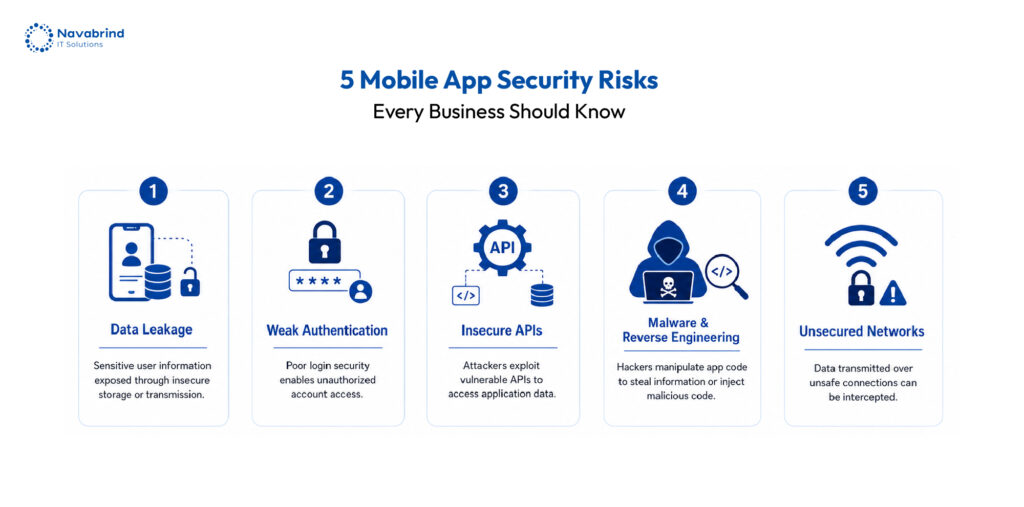
Mobile app security covers exposure points that weaken applications across Android and iOS ecosystems, where attackers exploit design gaps and runtime weaknesses. Mobile app security risks include insecure storage, broken authentication flows, session hijacking, and permission misuse that enable unauthorized entry into sensitive systems. Data breach scenarios emerge when encryption gaps and poor validation allow extraction of user credentials, financial records, or enterprise information. Malware intrusion, phishing campaigns, and reverse engineering techniques target application binaries to reveal logic and bypass controls. API communication channels introduce additional attack surfaces when token handling, request validation, and endpoint protection lack strength. Mobile app security testing evaluates these weaknesses across environments, supported by mobile app security testing tools that simulate threat behavior and detect exposure points. Mobile app security assessment validates resilience against mobile app security standards and strengthens an application security model that governs access control, data flow, and interaction between client and server layers.
Core Elements of Mobile App Security
Mobile app security defines core mechanisms governing authentication and user access control, ensuring identity verification and permission boundaries across application layers in Android and iOS environments. Data encryption supports protected communication channels, reducing exposure during transmission between client and server environments. Secure data storage practices safeguard credentials and sensitive records stored on device memory across enterprise and consumer applications. Network security and API protection manage request validation, token handling, and endpoint exposure across connected services. Secure coding standards guide development practices that reduce vulnerabilities introduced during implementation and strengthen control behavior across the application lifecycle. Mobile app security testing identifies mobile app security risks across functional flows, while mobile app security testing tools simulate attack patterns to detect weakness patterns across runtime conditions. Mobile app security assessment evaluates compliance against mobile app security standards and strengthens validation of controls under the application security model governing access, data flow, and system interaction across platforms.
Mobile App Security Best Practices for Developers
Mobile app security establishes protective practices that reduce exposure during development and deployment across Android and iOS environments. Strong authentication mechanisms enforce identity verification through password policies, token validation, and session controls that reduce unauthorized entry. Multi-Factor Authentication (MFA) adds layered verification steps across login flows, limiting account takeover attempts. Securing APIs and backend infrastructure strengthens data exchange channels through strict request validation, encrypted communication, and controlled endpoint exposure. Prevention of code tampering and reverse engineering protects application binaries from modification, logic extraction, and runtime manipulation. Regular mobile app security testing supports continuous validation of application behavior against mobile app security risks, while mobile app security testing tools detect vulnerabilities across runtime and integration layers. Mobile app security assessment measures resilience against mobile app security standards and reinforces the application security model governing authentication, data flow, and system interaction across digital environments.
Best Practices for Protecting User Data
Mobile App Security governs protection of user information across mobile environments where sensitive data flows through device storage, network channels, and backend systems. Encrypting sensitive customer information ensures unreadable formats during storage and transmission, reducing exposure during interception attempts. Managing permissions and device access limits application reach into contacts, location, camera, and files, reducing mobile app security risks linked to privilege misuse. Minimizing data collection and storage reduces attack surface and limits retention of exposed records across compromised environments. Securing payment information in mobile applications strengthens transaction handling through tokenization, encryption layers, and controlled payment gateways aligned with mobile app security standards. Ensuring compliance with global data privacy regulations supports legal adherence across jurisdictions handling user information. Mobile app security testing validates these protections under real conditions, while mobile app security testing tools identify gaps across runtime behavior and integrations. Mobile app security assessment strengthens the application security model governing access control, encryption flow, and data handling logic across platforms.
Mobile App Security in Ecommerce and Enterprise Applications
Mobile App Security defines protection layers for ecommerce and enterprise environments where transactions, user accounts, and sensitive workflows operate across mobile platforms. Protecting mobile commerce transactions reduces exposure during payment authorization, cart processing, and checkout flows by applying encryption, token validation, and strict session control aligned with mobile app security standards. Securing enterprise mobility applications safeguards internal workflows, employee access, and business data exchange across distributed systems. Managing customer accounts and payment gateways strengthens authentication, credential handling, and transaction verification across financial operations. Preventing fraud in mobile banking and retail applications reduces risks from unauthorized transfers, account takeover attempts, and manipulated transaction requests through continuous mobile app security testing and validation. Mobile app security testing tools simulate attack patterns to identify weak points across runtime behavior and integrations. Mobile app security assessment reinforces the application security model governing identity control, data flow, and transaction integrity, strengthening trust in mobile-driven business ecosystems.
Common Mobile App Security Mistakes Businesses Make
Mobile App Security weaknesses emerge when development and operational controls fail to address exposure points across application environments. Weak password and authentication policies allow unauthorized entry through predictable credentials, weak session handling, and absent verification layers. Storing sensitive data in plain text increases mobile app security risks by exposing credentials, financial records, and personal identifiers within device storage. Ignoring application updates and patch management leaves unresolved vulnerabilities active across production environments, increasing exploitation chances. Poor API security implementation creates open endpoints, weak token validation, and insufficient request filtering that expand attack surfaces across connected services. Lack of penetration testing before deployment reduces visibility into hidden flaws that impact system behavior under threat conditions. Mobile app security testing evaluates these gaps across functional flows, while mobile app security testing tools detect vulnerabilities across runtime and integration layers. Mobile app security assessment validates alignment with mobile app security standards and strengthens the application security model governing authentication, data protection, and system interaction across platforms.
Mobile App Security Testing and Monitoring
Mobile App Security testing and monitoring establish continuous validation of application behavior across changing threat conditions in Android and iOS environments. Importance of penetration testing lies in exposing hidden entry points, logic flaws, and unauthorized access paths that increase mobile app security risks across production systems. Vulnerability assessment and risk analysis classify weaknesses based on impact, exploitability, and exposure level, strengthening prioritization within security programs. Real-time threat monitoring and incident response track suspicious activity, unauthorized requests, and abnormal behavior patterns across application runtime environments. Mobile app security testing tools support detection of injection flaws, insecure APIs, and authentication gaps across multiple layers of the application security model. Continuous improvement strategies refine protection mechanisms through repeated mobile app security assessment aligned with mobile app security standards, ensuring stronger resilience against evolving attack patterns and maintaining control over data integrity, user access, and system interactions across enterprise and consumer mobile ecosystems.
Emerging Trends in Mobile App Security
Mobile App Security continues evolving with emerging practices that strengthen protection across Android and iOS ecosystems facing advanced attack patterns. AI-driven threat detection and prevention enhances identification of anomalous behavior, malicious requests, and exploitation attempts across application environments, improving response accuracy against mobile app security risks. Biometric authentication and identity verification strengthen access control through fingerprint, facial recognition, and behavioral validation methods that reduce dependency on static credentials. Zero Trust Security models for mobile applications enforce continuous verification across every interaction, limiting implicit trust within internal and external communication flows aligned with mobile app security standards. Cloud-based mobile security solutions extend protection to distributed infrastructure, securing data exchange, storage, and API communication across hybrid environments. DevSecOps integration in mobile app development embeds security validation within development pipelines, strengthening mobile app security testing, improving mobile app security testing tools usage, and reinforcing mobile app security assessment within the application security model governing code, deployment, and runtime behavior.
Building a Long-Term Mobile App Security Strategy
Mobile App Security strategy development focuses on establishing long-term protection across mobile ecosystems where applications evolve alongside expanding user bases and complex integrations. Creating security policies for mobile development teams defines governance for authentication flow, data handling, and access control aligned with mobile app security standards. Training developers on secure coding practices reduces vulnerabilities introduced during implementation and strengthens awareness of mobile app security risks across application layers. Integrating security into the app development lifecycle embeds validation checkpoints across design, build, testing, and deployment stages, reinforcing mobile app security testing and consistent use of mobile app security testing tools. Scaling security for growing mobile applications supports expansion across higher traffic, new features, and distributed infrastructure while maintaining a strong application security model. Mobile app security assessment ensures continuous evaluation of system resilience, helping organizations maintain protection against evolving threats without compromise in data integrity, user access control, and system reliability across mobile environments.
Frequently Asked Questions
1.What is Mobile App Security and why is it important?
Mobile App Security defines protection mechanisms that safeguard mobile applications, data exchange, and user interactions across Android and iOS ecosystems from unauthorized access, tampering, and data exposure. Importance increases due to rising mobile app security risks such as insecure storage, weak authentication, API misuse, malware attacks, and data leakage that impact business operations, financial transactions, and user trust. Strong mobile app security testing and mobile app security assessment aligned with mobile app security standards strengthen protection under a structured application security model.
2.What are the biggest security risks for mobile applications?
Biggest mobile app security risks include insecure data storage, broken authentication, unsafe API endpoints, malware injection, phishing attacks, reverse engineering, and improper permission handling. These vulnerabilities enable attackers to extract sensitive data, manipulate application logic, or bypass security controls across mobile environments.
3.What are the best practices for mobile app security testing?
Best practices for mobile app security testing include penetration testing, vulnerability scanning, runtime analysis, API validation, and risk-based assessment using mobile app security testing tools. Continuous mobile app security assessment ensures alignment with mobile app security standards and strengthens detection of vulnerabilities across application layers.
4.How does code obfuscation protect mobile apps from reverse engineering?
Code obfuscation protects mobile applications from reverse engineering by converting readable code structure into complex, hard-to-interpret logic. This reduces exposure of business logic, credentials, and sensitive workflows within the application security model, limiting attacker ability to analyze or replicate application behavior.
5.How to implement multi-factor authentication in mobile app security?
Multi-factor authentication in Mobile App Security is implemented by combining multiple verification layers such as passwords, OTPs, biometrics, and device-based tokens. This approach strengthens identity validation and reduces account takeover risk by requiring multiple independent factors before granting access to sensitive features or user accounts.
Related Articles








 Post
Post