





- August 3, 2022
- Posted by: Sumit Sinha
- Categories: Blog, E-Commerce Development, PWA Services

written by

Sumit Sinha
Associate Lead, Odoo
Sumit Sinha is an Associate Lead with over a decade of experience in enterprise software implementation. At Navabrind IT Solutions, he leads large and complex Odoo projects, consistently delivering world‑class Odoo implementations and integrations. He is recognized for his meticulous attention to detail, commitment to excellence, and dedication to going the extra mile to ensure successful project outcomes.
-
 Post
PostOdoo 20 for the E-commerce Industry: Features, Capabilities, & Opportunities
Odoo 20 for the E-commerce Industry: Features, Capabilities, & Opportunities October 16, 2026 Posted by: Abinay Subramaniam P Categories: Blog, Ecommerce, Odoo ERP No Comments What is new in Odoo 20 for e-commerce? It is customary for Odoo to announce an annual update, and on 24 September it launched Odoo 20. The ERP has several -
Post
Odoo 20 for Manufacturing: What’s New and How It Helps Manufacturers
Odoo 20 for Manufacturing: What’s New and How It Helps Manufacturers October 8, 2026 Posted by: Category: Manufacturing No Comments What's new in Odoo 20 for manufacturing? Odoo 20 has introduced several new features in the manufacturing module, these are in back order planning, bill of materials, component replacement, continuous production, draft versus confirmed manufacturing -
 Post
PostERP Data Migration Services for Manufacturers: Why Odoo is the Best Fit
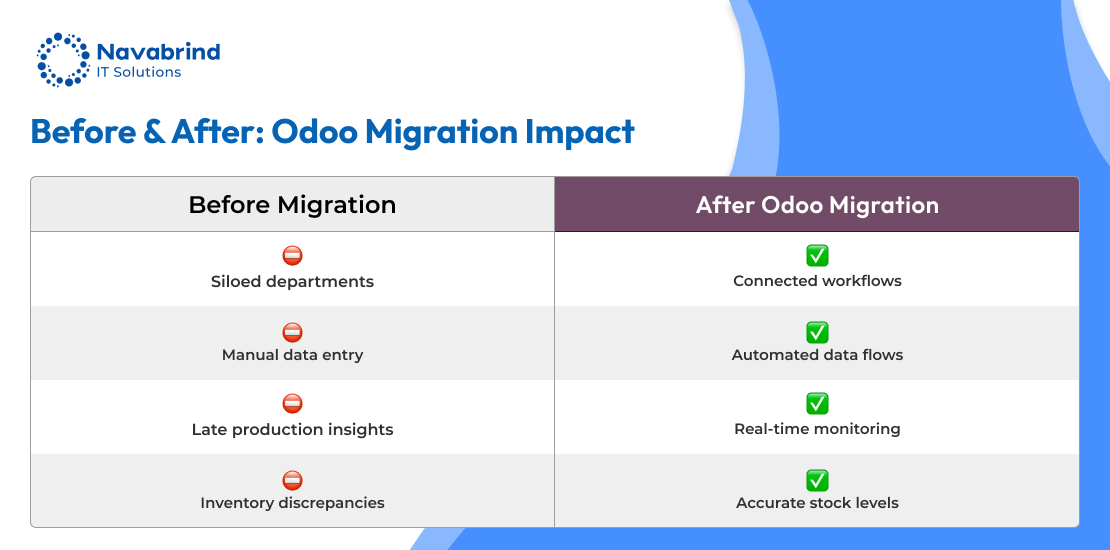
ERP Data Migration Services for Manufacturers: Why Odoo is the Best Fit September 9, 2025 Posted by: Dania Sibionna Philemon Categories: Blog, Odoo No Comments Odoo has become a top choice for manufacturing companies looking for reliable ERP solutions. The platform serves millions of users worldwide and expects to continue its aggressive market growth. The

written by
Sumit Sinha
Associate Lead, Odoo
Sumit Sinha is an Associate Lead with over a decade of experience in enterprise software implementation. At Navabrind IT Solutions, he leads large and complex Odoo projects, consistently delivering world‑class Odoo implementations and integrations. He is recognized for his meticulous attention to detail, commitment to excellence, and dedication to going the extra mile to ensure successful project outcomes.