





- September 21, 2022
- Posted by: Venkadesh Nagarajan
- Categories: Blog, E-Commerce Development

written by

Venkadesh Nagarajan
Venkatesh Nagarajan is the Founder and Chief Technology Officer at Navabrind IT Solutions, where he oversees digitalization, solution design, and automation for hundreds of customers. He is responsible for implementing the company’s full portfolio of solutions on platforms such as Odoo, Magento, Akeneo, and OdooPIM. As a techno‑functional consultant, he excels at understanding clients’ business needs and designing tailored solutions that deliver significant business value. He ensures that every client engagement is executed using industry best practices, with a focus on personalization, innovation, and adherence to budget and timelines. Venkatesh leads a team of highly skilled solution architects, developers, and project managers who are engaged in implementing, integrating, customizing, maintaining, and supporting clients across industries, including e‑commerce, retail, automotive, electronics, manufacturing, engineering, healthcare, IT and BPM, real estate, and textiles.
-
 Post
PostOdoo 20 for the E-commerce Industry: Features, Capabilities, & Opportunities
Odoo 20 for the E-commerce Industry: Features, Capabilities, & Opportunities October 16, 2026 Posted by: Abinay Subramaniam P Categories: Blog, Ecommerce, Odoo ERP No Comments What is new in Odoo 20 for e-commerce? It is customary for Odoo to announce an annual update, and on 24 September it launched Odoo 20. The ERP has several -
Post
Odoo 20 for Manufacturing: What’s New and How It Helps Manufacturers
Odoo 20 for Manufacturing: What’s New and How It Helps Manufacturers October 8, 2026 Posted by: Category: Manufacturing No Comments What's new in Odoo 20 for manufacturing? Odoo 20 has introduced several new features in the manufacturing module, these are in back order planning, bill of materials, component replacement, continuous production, draft versus confirmed manufacturing -
 Post
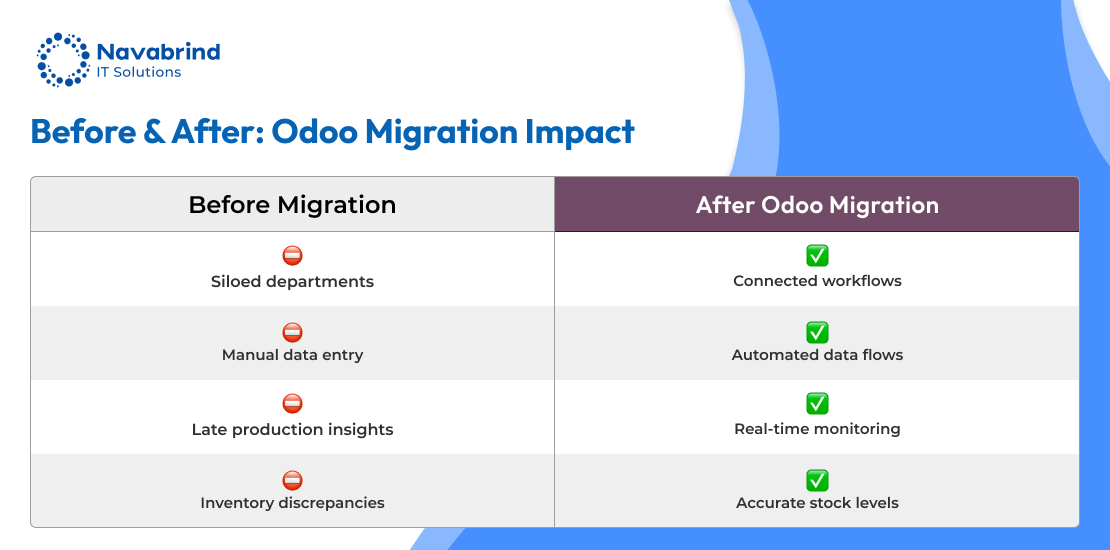
PostERP Data Migration Services for Manufacturers: Why Odoo is the Best Fit
ERP Data Migration Services for Manufacturers: Why Odoo is the Best Fit September 9, 2025 Posted by: Dania Sibionna Philemon Categories: Blog, Odoo No Comments Odoo has become a top choice for manufacturing companies looking for reliable ERP solutions. The platform serves millions of users worldwide and expects to continue its aggressive market growth. The

written by
Venkadesh Nagarajan
Venkatesh Nagarajan is the Founder and Chief Technology Officer at Navabrind IT Solutions, where he oversees digitalization, solution design, and automation for hundreds of customers. He is responsible for implementing the company’s full portfolio of solutions on platforms such as Odoo, Magento, Akeneo, and OdooPIM. As a techno‑functional consultant, he excels at understanding clients’ business needs and designing tailored solutions that deliver significant business value. He ensures that every client engagement is executed using industry best practices, with a focus on personalization, innovation, and adherence to budget and timelines. Venkatesh leads a team of highly skilled solution architects, developers, and project managers who are engaged in implementing, integrating, customizing, maintaining, and supporting clients across industries, including e‑commerce, retail, automotive, electronics, manufacturing, engineering, healthcare, IT and BPM, real estate, and textiles.