Continuing from part 1, I’ve seen many organizations treat strategic sourcing and the procure-to-pay (P2P) process as separate functions, and the result is almost always inefficiency, by way of higher costs, inconsistent supplier performance, and missed opportunities for leverage. To me, strategic sourcing isn’t just about getting lower prices; it’s a continuous, data-driven process that informs every purchasing decision. When I connect sourcing directly to the P2P workflow, I gain control over supplier selection, pricing, and contract compliance. Without that alignment, even the fastest P2P system fails to deliver real value. But when both work together, procurement transforms into a powerful, value-driven engine that drives cost savings, strengthens supplier relationships, and improves overall business performance, here’s how
What Happens When You Integrate Sourcing and Procurement
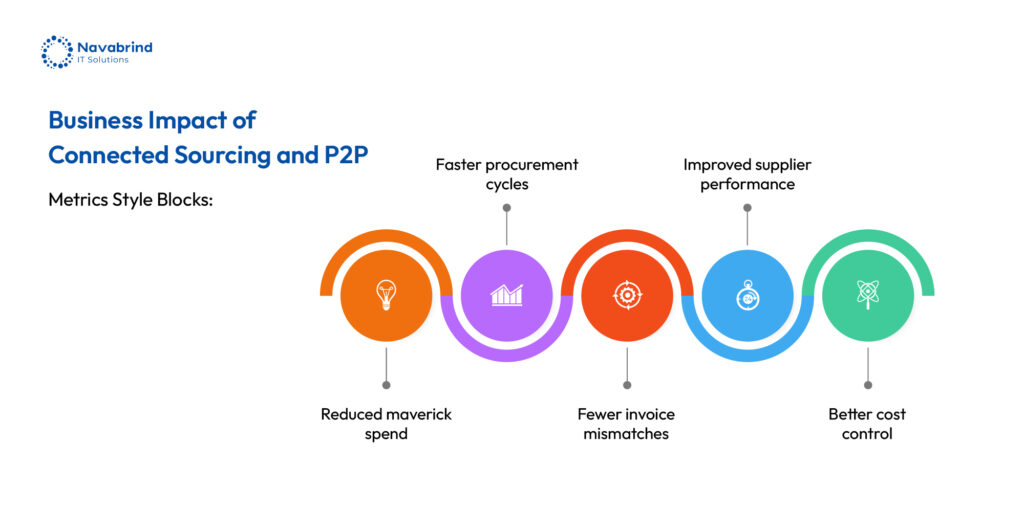
When strategic sourcing connects with the procure to pay process, procurement shifts from transactional activity to a value-driven system. The impact shows up in cost control, cycle speed, supplier performance, and financial accuracy across the procure to pay business process.
What Changes in a Connected Sourcing-to-Payment Model:
Reduced Maverick Spend
Pre-approved supplier catalogs, defined through strategic sourcing, guide purchasing decisions within the P2P process. Teams select from vetted vendors with negotiated terms, eliminating off-contract buying and uncontrolled spend.
Faster Purchase Cycles
When supplier data, pricing, and contracts are already embedded in the procurement process, requisitions move forward without delays. The procure to pay process operates with fewer approvals and less back-and-forth.
Fewer Invoice Disputes
Aligned data between sourcing agreements and purchase orders ensures consistency. The P2P process matches invoices against accurate pricing, reducing exceptions and payment delays.
Stronger Supplier Relationships
Performance data captured through the procure to pay business process feeds into strategic sourcing decisions. Suppliers are evaluated on delivery, quality, and reliability—not just cost leading to more stable partnerships.
A Real-World Scenario: When Integration Is Missing
Consider a mid-size organization with decentralized teams managing sourcing procurement across departments.
- Each team selects vendors independently
- Pricing varies for identical materials
- Contracts are not consistently applied
- Invoice mismatches delay payments
- Procurement teams spend time resolving disputes instead of optimizing spend
In this environment, the procure to pay process continues to function, yet inefficiencies multiply across the procurement process.
What Changes After Integration:
When strategic sourcing is embedded into the P2P process:
- Supplier selection is standardized across teams
- Pricing and terms are enforced at the purchase stage
- Procurement cycles accelerate with fewer interruptions
- Financial data aligns with sourcing agreements
- Spend visibility improves across the organization
This transformation turns sourcing and procurement into a coordinated system rather than disconnected activities.
The Bottom Line
Organizations that integrate strategic sourcing with the procure to pay process gain control over spend, reduce operational friction, and improve supplier outcomes. Those that keep them separate continue to absorb hidden costs within the procure to pay business process costs that directly impact margins and growth.
Common Pitfalls That Break the Sourcing-to-P2P Link
A disconnect between strategic sourcing and the procure to pay process erodes value across the procurement process. The issues below appear frequently and compound over time impacting cost, supplier performance, and financial control.
Siloed Teams
When sourcing teams and accounts payable operate in isolation, the procure to pay business process loses alignment.
- Sourcing negotiates terms that procurement teams do not enforce
- Accounts payable handles invoices without visibility into contracts
- Disputes increase due to lack of shared data
A connected approach to sourcing and procurement ensures that decisions made during strategic sourcing carry through the P2P process without breakdowns.
Technology Gaps
In many organizations, sourcing procurement relies on spreadsheets, yet the procure to pay process runs inside an ERP system. This split creates inconsistencies.
- Supplier data exists in multiple formats
- Pricing agreements are not reflected in purchase orders
- Procurement teams lack access to sourcing insights
Without a bridge between systems, the procurement process operates with fragmented information, reducing control and visibility.
Ignoring the Feedback Loop
The P2P process generates valuable data spend patterns, supplier performance, and payment trends. When this data does not feed back into strategic sourcing, opportunities are missed.
- Supplier evaluations rely on outdated assumptions
- Negotiations lack accurate spend insights
- Category strategies fail to evolve
Closing this loop strengthens decision-making across sourcing and procurement and improves outcomes within the procure to pay business process.
Over-Focus on Cost Alone
Focusing only on the lowest price during strategic sourcing creates downstream risks.
- Low-cost suppliers may compromise quality
- Compliance issues increase due to weak vendor standards
- Delivery inconsistencies disrupt production
A balanced sourcing procurement approach considers cost, reliability, and compliance to protect the integrity of the procure to pay process.
Quick Wins Without Full Disruption
Addressing these gaps does not require a complete overhaul. Incremental improvements within the procurement process can deliver immediate impact:
- Align sourcing and finance teams through shared data
- Standardize supplier selection within the P2P process
- Use procurement data to refine sourcing strategies
Strengthening the connection between strategic sourcing and the procure to pay process transforms fragmented workflows into a controlled, value-driven system without disrupting ongoing operations.
How to Build a Connected Sourcing and Procurement Strategy
A high-performing procurement process starts with alignment between strategic sourcing and the procure to pay process. The steps below create a connected model where sourcing decisions guide execution, and execution data strengthens sourcing outcomes.
Step 1: Map Your Current P2P Process
Start by documenting your procure to pay process from requisition to payment.
- Identify where sourcing inputs are missing
- Detect inconsistencies in supplier selection and pricing
- Highlight gaps between sourcing decisions and execution within the P2P process
This step reveals where the procure to pay business process operates without guidance from strategic sourcing.
Step 2: Conduct Spend Analysis
Analyze purchasing data across categories to uncover patterns and opportunities.
- Identify high-spend categories with fragmented supplier usage
- Detect pricing variations for similar materials or services
- Prioritize areas where strategic sourcing can deliver impact
This analysis strengthens sourcing procurement by grounding decisions in actual spend behavior rather than assumptions.
Step 3: Build a Preferred Supplier Program
Create a defined supplier base through strategic sourcing and integrate it into the procurement process.
- Select vendors based on cost, quality, and reliability
- Establish negotiated pricing and terms
- Ensure these suppliers are embedded into P2P process workflows
This approach standardizes purchasing and reduces off-contract spend across sourcing and procurement.
Step 4: Align Contracts with Purchase Orders
Contracts established during strategic sourcing must flow into execution.
- Link contract terms with purchase order creation
- Ensure pricing, delivery conditions, and service levels are enforced
- Reduce discrepancies between negotiated agreements and actual transactions
This alignment ensures that the procure to pay process reflects sourcing decisions without deviation.
Step 5: Establish a Governance Cadence
Create a recurring review cycle where data from the P2P process informs future sourcing strategies.
- Review supplier performance, spend trends, and contract compliance
- Use insights to refine supplier selection and negotiation strategies
- Continuously improve the procure to pay business process through data-backed decisions
This feedback loop transforms strategic sourcing into an ongoing discipline within sourcing and procurement.
The Outcome
A connected strategy ensures that strategic sourcing defines the rules and the procure to pay process executes them with consistency. This alignment strengthens cost control, improves supplier performance, and drives measurable value across the procurement process.
Strategic Sourcing: The Foundation of P2P Excellence
The strength of any procure to pay process is defined long before a requisition is raised. Without a disciplined strategic sourcing approach, the procure to pay business process becomes a transactional workflow that executes decisions lacking consistency and control. When sourcing and execution align, the procurement process shifts from routine purchasing to a value-generating function. Organizations that connect strategic sourcing with the P2P process gain tighter spend control, consistent supplier performance, and stronger financial outcomes. Those that treat sourcing procurement and execution as separate functions continue to absorb hidden costs across the lifecycle.
Schedule a conversation with us now!
Related Articles








 Post
Post Post
Post