The US Retailer's Dilemma in the Age of Instant Gratification
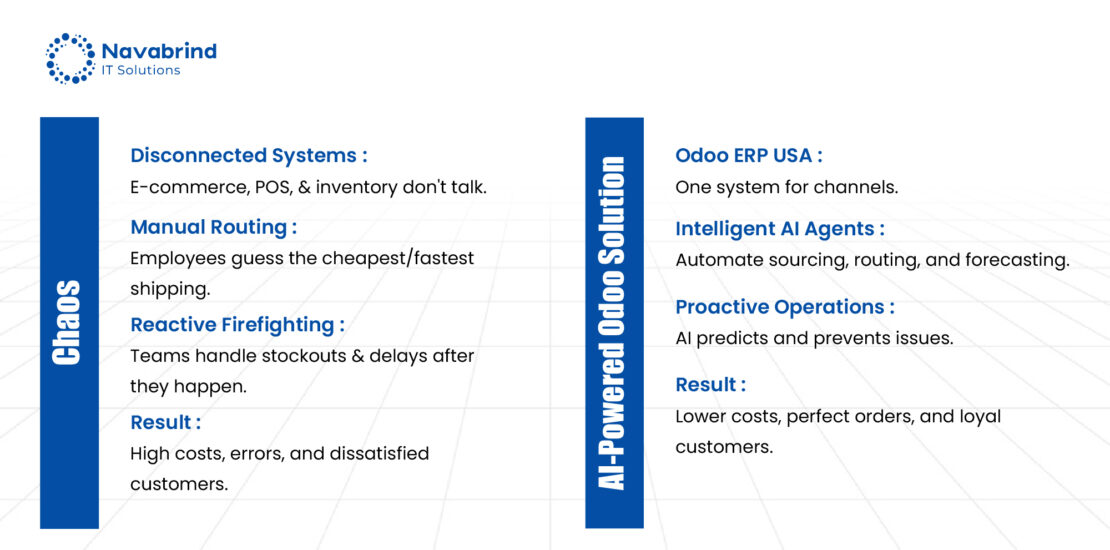
The friction created by disconnected systems and manual processes contradicts the gratification consumers demand. This operational lag not only erodes margins but surrenders market share to agile, digitally native competitors.
The breakthrough lies in strategic AI workflow automation embedded into the ERP for managing online and offline retail in the USA. This fusion transforms operations into a synchronized engine.
Inventory is allocated between channels, but by AI analyzing sales velocity, local demand signals, and fulfillment costs. This orchestration is the omnichannel ERP USA strategy, turning complexity into a customer experience.
AI workflows in your retail ERP system minimize stockouts and overstock, optimize delivery routes, and automate exception handling. This slashes operational costs while boosting revenue through improved conversion rates and loyalty.
Choosing the right Odoo ERP implementation partner in the US is important, to configure these intelligent workflows to your business logic. The right partner, such as Navabrind IT Solutions ensures the platform’s native tools, like the robust Odoo point of sale solution is fully integrated with AI-driven back-office operations.
By consolidating point-of-sale, e-commerce, inventory, and CRM into one platform with embedded AI, you eliminate costly integrations and legacy system overhead. Odoo for e-commerce and brick-and-mortar operations becomes a cohesive unit.
Why an ERP is Non-Negotiable for US Retail
A data disconnect results in silos, leading to oversold products, inaccurate financials, and fragmented customer experiences. This fractured approach is a direct path to failure. It creates an authoritative source of truth across the channels and functions.
Without a clean data stream flowing from the customer touchpoint, AI workflow automation is impossible. AI cannot allocate stock, predict demand, or personalize promotions if it’s analyzing conflicting datasets from disparate systems. Odoo provides the clean fuel for AI’s analytical engine.
For businesses seeking the best ERP for omnichannel retail operations in the USA, this foundational power makes Odoo ERP a compelling choice. It consolidates mission-critical applications into one coherent system, transforming it from a cost into an asset.
Beyond Basic Automation: The Advent of AI Agents in Odoo
As AI gains traction, the next evolution is a customized AI workflow integrated into your Odoo ERP. These are not macros, but autonomous systems that perceive your data, analyze context, and execute strategic decisions. These workflows transform static automation into a dynamic, learning asset.
They analyze patterns across your Odoo e-commerce site and Odoo point-of-sale solution to predict localized demand spikes and automatically trigger purchase orders before a stockout occurs. AI powered workflows process customer service inquiries using natural language, resolving issues from the system. They refine fulfillment logic, learning which shipping carriers and warehouse routes maximize speed while minimizing cost.
Incorporating AI capabilities requires a sophisticated Odoo ERP implementation partner in the USA with expertise in configuring cognitive systems. Their role is to align the AI’s objectives with your business goals within the Retail ERP USA framework.
Transforming Order Fulfillment: Five AI Agent Use Cases in Action
1. The Predictive Inventory Agent
By analyzing historical data, sales trends from your Odoo for e-commerce platform, and local market signals, predictive inventory agents forecast demand across the channels. They generate and dispatch purchase orders and inter-warehouse transfer requests, ensuring capital isn’t trapped in dead stock while preventing stockouts.
2. The Intelligent Routing & Sourcing Agent
The AI routing and sourcing agent evaluates customer location, available inventory at a node, carrier costs, and promised delivery windows. It then selects the optimal fulfillment path, for instance, if it should ship from a nearby store to save time, from a central warehouse to save cost, or to trigger a drop ship.
3. The Proactive Customer Communication Agent
This AI agent anticipates delays based on carrier data and alerts customers before they inquire. It personalizes updates based on individual customer profiles and purchase history. Upon a return request, it can authorize the return, generate a label, and update available inventory in your ERP for managing online and offline retail in the USA.
4. The Dynamic Warehouse Optimization Agent
This agent transforms warehouse operations from a cost center into an adaptive engine. It generates smart picking waves that batch orders for minimal walk time and coordinates tasks across workers. This continuous ERP automation in the USA warehouse translates into faster shipments and lower operational costs.
5. The Fraud & Exception Management Agent
Acting as a vigilant layer of security and efficiency, this agent scans the order against evolving fraud patterns, flagging high-risk transactions for review before processing. It also manages routine exceptions, correcting address verifications, initiating split shipments when full order inventory isn’t in one location, and resolving minor delivery discrepancies.
The Tangible ROI: What US Retailers Gain from AI-Powered Odoo
Operational efficiency is achieved through AI workflow automation. Manual data entry, order routing decisions, and inventory reconciliation are eliminated. This drastic reduction in tasks translates to fewer errors, faster process cycles, and human resources reallocated to growth initiatives rather than administrative chores.
- The Routing Agent reduces shipping costs by selecting optimal carriers and fulfillment routes.
- The Warehouse Optimization Agent reduces labor overhead by streamlining picking operations.
- The Predictive Inventory Agent minimizes capital tied up in excess stock while preventing lost sales from stockouts, optimizing inventory carrying costs.
Faster, reliable delivery powered by intelligent sourcing, with the proactive communication agent’s personalized updates, builds undeniable loyalty and increases customer lifetime value. This experience with your Odoo e-commerce site and Odoo point-of-sale solution is the hallmark of omnichannel ERP in the US.
The Critical Role of an Expert Odoo ERP Partner in the US
The Odoo ERP implementation partner in the US brings expertise in Retail and practical AI integration. They perform a detailed needs analysis to align technology with your business goals. Their services include agent development and training, data migration, and configuration of Odoo for e-commerce and point-of-sale solutions for US retailers.
A Phased, Value Approach
- Solidify the Foundation: Ensure your Odoo ERP instance is configured and that clean data flows from sales channels into the database.
- Target High-Impact Processes: Collaborate with your partner to identify one or two high-volume, rule-intensive processes where AI workflow automation will have an outsized impact. Common starting points are inventory forecasting or intelligent order routing.
- Implement and Scale: Launch with a focused agent, such as the Predictive Inventory Agent. Measure its performance, refine its logic, and demonstrate clear ROI. This proven success builds internal confidence and funds the phased rollout of additional agents, scaling your capabilities methodically.
Addressing Affordability and ROI
Odoo allows you to start with basic functions and add capabilities like AI without exorbitant licensing fees. The investment in ERP automation USA is offset by the cost savings and revenue protection it generates.
Empower Your Retail Operation
Empowering your retail operation with AI-powered automated workflows is about far more than “going digital” – it’s about redesigning how work happens so your teams can focus on high-value activities instead of repetitive tasks.
What AI automation really changes
AI-driven workflows connect data across channels and systems to make your retail operation more proactive than reactive.
Instead of teams manually reconciling inventory, orders, and customer data, AI detects patterns, triggers actions, and surfaces insights in real time so decisions become faster and more accurate.
From manual tasks to intelligent flows
In a traditional setup, retail teams spend hours on routine work such as updating stock counts, routing orders, and segmenting customers.
With AI workflows, these are converted into intelligent flows: low-stock alerts trigger automated purchase suggestions, abandoned carts trigger personalized outreach, and high-intent signals trigger sales follow-ups without human intervention.
Smarter inventory and fulfillment
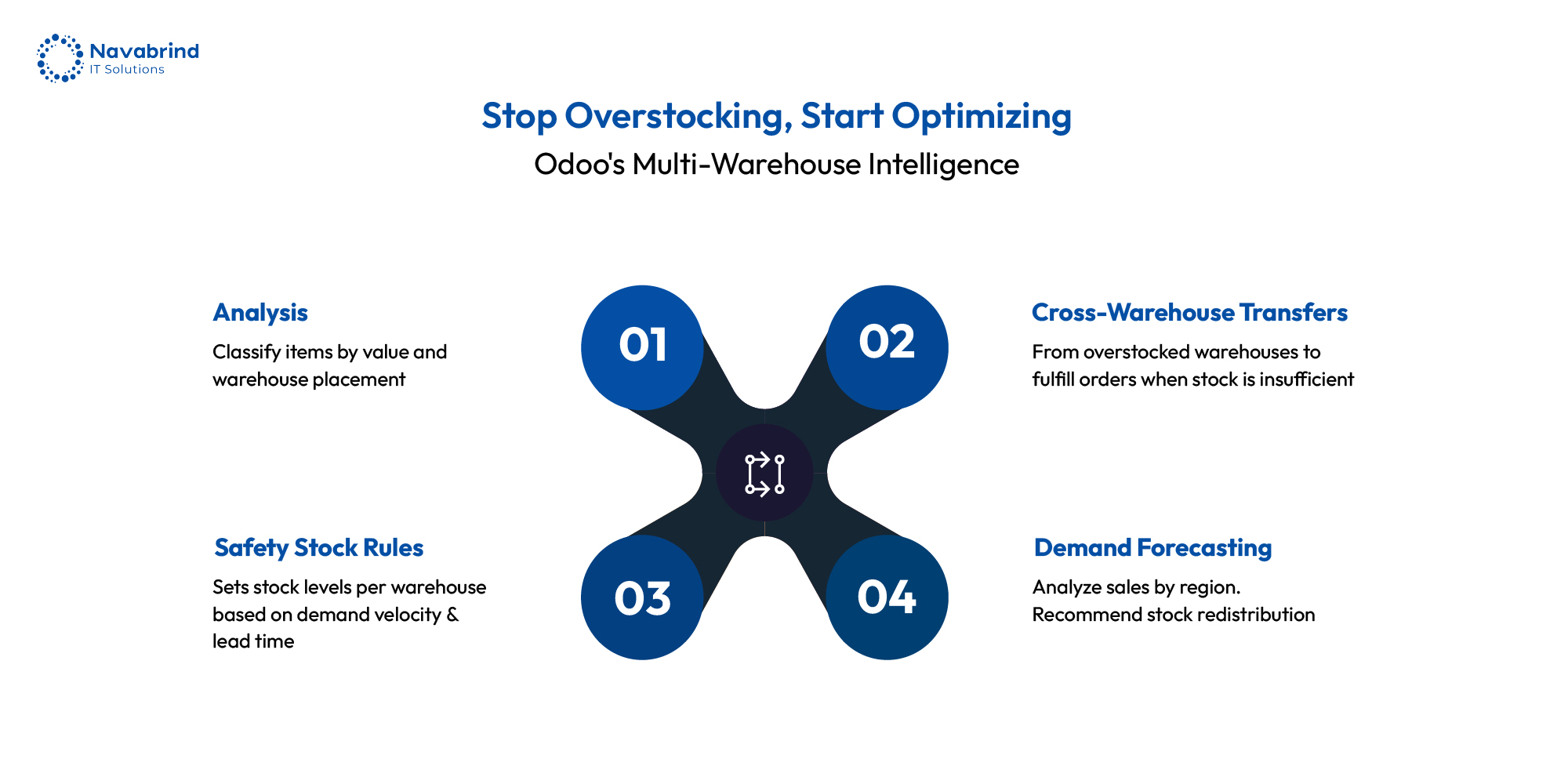
AI can continuously analyze sales velocity, seasonality, and regional demand to recommend optimal reorder points and stock levels.
This reduces stockouts and overstock, while automated workflows can route orders to the best warehouse or store based on availability, lead time, and shipping cost.
Elevating customer experience
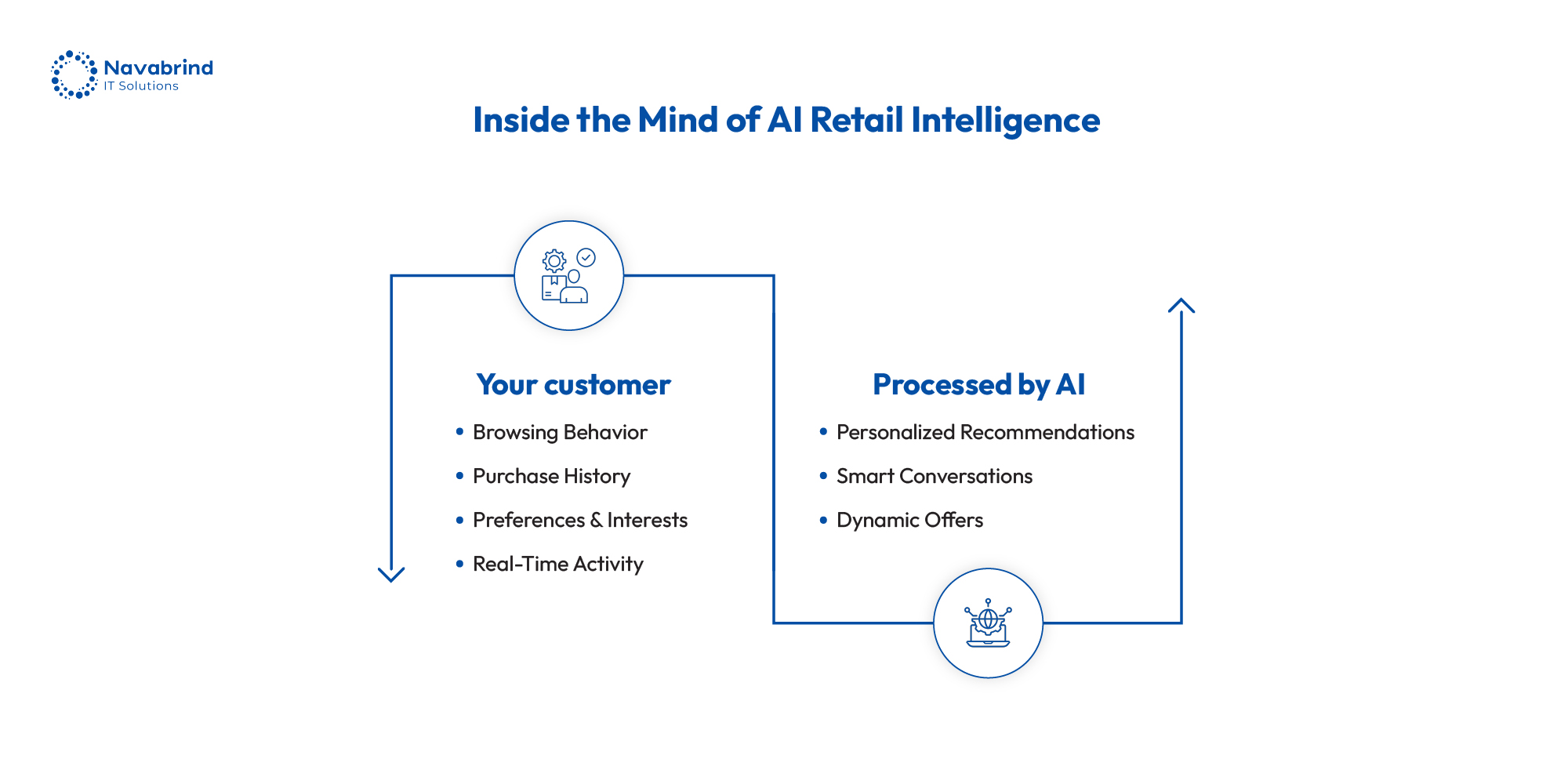
AI-powered automation enables retailers to respond to customers in context, not in isolation.
From personalized product recommendations to automated post-purchase journeys, every interaction can be tailored to preferences, history, and behavior, creating a more coherent and memorable brand experience.
Freeing teams to focus on growth
When AI takes over repetitive, rules-based tasks, your teams can spend more time on strategy, creativity, and relationship-building.
Instead of firefighting operational issues, leaders can focus on launching new assortments, exploring new channels, and fine-tuning pricing and promotions to drive sustainable growth.
Frequently Asked Questions
- What is the best ERP for omnichannel retail operations in the USA?
The best ERP for omnichannel retail operations in the USA should function as a command center. It cannot be a loose collection of integrated apps but a platform where data from the channels is centralized and actionable. This omnichannel ERP approach is important because customer journeys are non-linear. A shopper might browse online, check inventory at a local store, and then make an in-store purchase for pickup. The ERP should provide a view of that customer and accurate inventory visibility across the touchpoints to fulfill expectations.
Its architecture is designed from the ground up for this model, treating online and offline not as separate entities but as interconnected nodes in one network. The platform’s Odoo for e-commerce module and Odoo point of sale solution for US retailers are not third-party additions; they are components of the system. This ensures that a sale on the web reflects in store-level inventory counts, and a loyalty point earned in-store is available for online redemption, eliminating the delays and errors inherent in solutions.
This is where Odoo ERP distinguishes itself by integrating AI-driven workflow automation. The data foundation becomes the fuel for agents that predict demand, optimize order routing, and personalize fulfillment.
2. How can AI Workflow Automation improve my retail ERP operations?
Yes, Odoo ERP offers robust analytics and reporting tools tailored for SMEs. SMEs can generate customiz
AI workflow automation shifts your Retail ERP from a system of record to a system of action. Traditional ERP automation in the USA relies on static, rule-based “if-then” scripts, such as sending a shipment notification when an order status changes. They automate not just tasks, but complex judgment and optimization processes that were previously the domain of experienced managers, leading to improvements in efficiency, cost, and accuracy.
For instance, an AI agent can analyze sales velocity, seasonal trends, and local events to forecast demand and generate purchase orders, reducing both stockouts and excess inventory costs. Another agent can evaluate incoming orders against variables such as customer location, available inventory across multiple warehouses or stores, and carrier rates to select the most profitable and fastest fulfillment path.
A communication agent can provide proactive, personalized shipping updates and handle routine returns without staff intervention. A fraud management agent monitors transactions, learning from patterns to flag high-risk orders before they are processed. By automating these repetitive, decision-making processes, you free your team from administrative tasks, minimize human error, and ensure your operation scales while executing optimal, profit-protecting decisions.
able reports, track key performance indicators (KPIs), and visualize data through dashboards, helping them monitor business performance at a granular level. With advanced analytics, SMEs can forecast trends, optimize operations, and identify growth opportunities, all essential for driving Digital Transformation with Odoo ERP.
3. Is there an affordable ERP system for retail businesses in the USA that includes AI?
An ERP system for retail business in the USA with integrated AI is not only possible but is a strategic necessity for mid-market retailers to compete. The key lies in selecting a platform like Odoo ERP that does not charge exorbitant licensing fees and does not have complex development costs associated with enterprise-level AI. You pay for the business applications you need, such as e-commerce or point-of-sale, and can then add AI workflow automation capabilities without an overhaul.
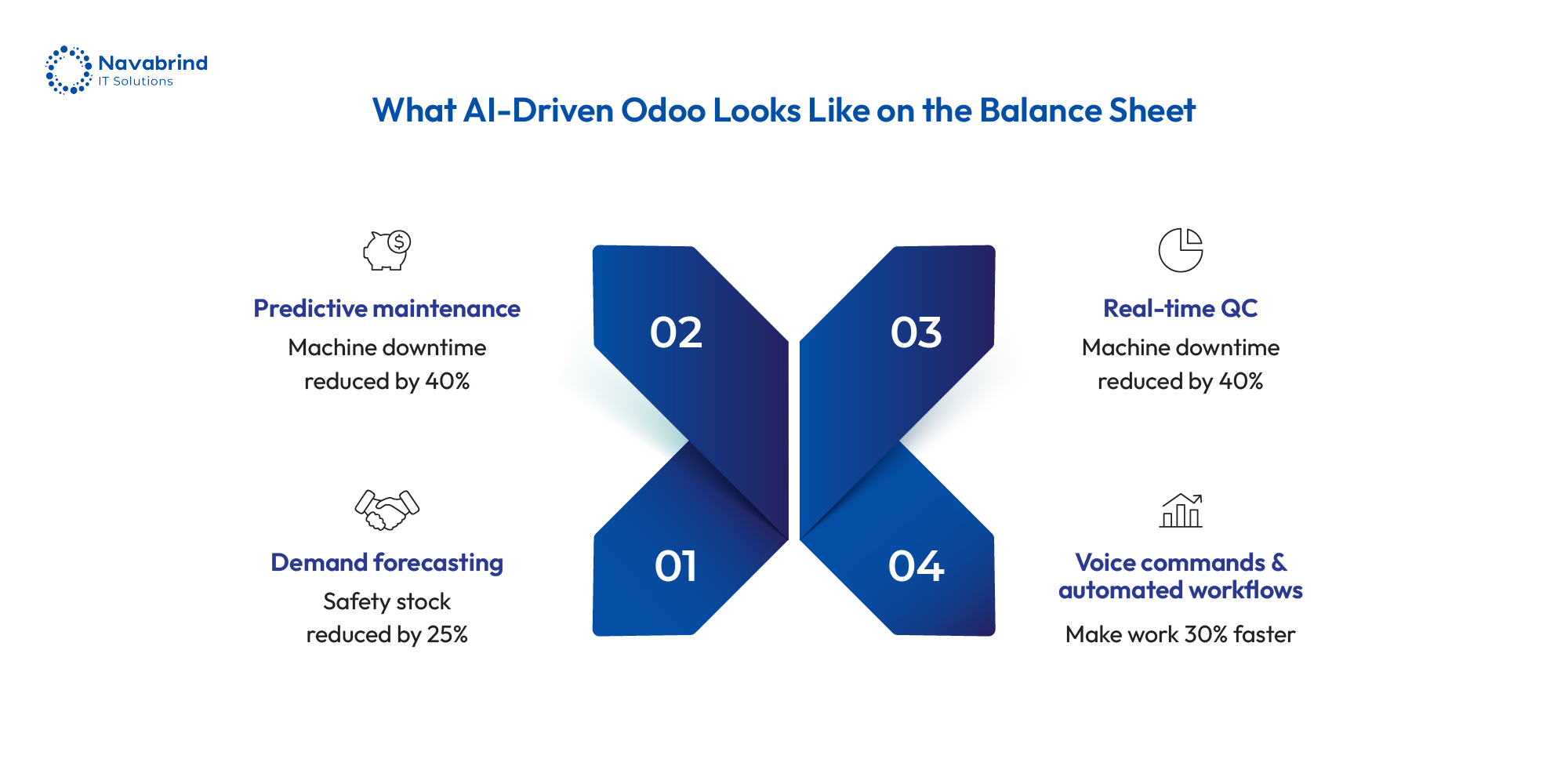
When AI agents are deployed within your retail ERP, they target major cost centers. They reduce excess inventory capital, optimize labor in warehouses, lower shipping costs through intelligent routing, and prevent revenue loss from fraud. These are not soft benefits; they are hard savings that offset the initial implementation investment.
A platform like Odoo ERP for retail and e-commerce businesses in the USA consolidates what would be disparate subscriptions into one coherent, unified ERP for managing online and offline retail in the USA. When you add AI that works to reduce operational expenses and increase revenue, the total cost of ownership becomes competitive, delivering enterprise-grade capability at a sustainable price point for growing businesses.
4. What does an ERP for managing online and offline retail in the USA actually do?
An ERP for managing online and offline retail in the USA eradicates data silos to create an authoritative version of the truth for your business. In practice, this means that when a product sells on your Odoo for e-commerce website, the inventory count updates not just in a central warehouse ledger, but also on the floor display of your Odoo point of sale solution for US retailers. When a store associate processes a return, the returned stock is instantly available to fulfill an online order. This synchronization is the operational function, eliminating the overselling, stock-holding inefficiencies, and customer service failures caused by disconnected systems.
Customer data from channels is consolidated into a profile. A purchase history that includes in-store transactions and online orders allows for personalized marketing and loyalty rewards regardless of where the customer shops. Financials are consolidated; sales, taxes, and costs from physical and digital storefronts flow into an accounting ledger, simplifying reporting and providing an accurate picture of profitability.
It allows you to execute retail strategies like Buy Online, Pick Up In-Store or ship-from-store with efficiency. It builds the data foundation required for the next level of competitiveness: AI workfow automation. Without this data stream, AI has nothing consistent or reliable to analyze. An ERP doesn’t just manage your retail operations, it prepares and empowers them for optimization.
5. Why do I need an Odoo ERP partner USA for implementation, and what do they do?
-
You need an Odoo ERP partner in the USA because implementing an omnichannel ERP with AI workflow automation is a business transformation, not a software installation. An expert partner like Navabrind IT Solutions brings localized knowledge of Retail ERP USA practices and the technical expertise to configure the platform’s capabilities to your operational workflows. We ensure your investment is configured from the start, avoiding missteps, workarounds, and failure to achieve the promised ROI that can occur with not planned implementation.
We conduct a thorough needs analysis, translating your business challenges into a tailored Odoo ERP for retail and e-commerce businesses in the USA blueprint. We manage the process of data migration, ensuring historical information is cleansed and accurately mapped into the system. For AI integration, they configure and “train” the automation agents, such as setting parameters for the inventory model or defining rules for the routing agent, ensuring these tools align with your business logic and goals. We handle the technical integration of modules like e-commerce, accounting, inventory, retail, point of sale, and other solutions for US retailers.
We help you navigate updates, scale the system as you grow, and identify opportunities to leverage deeper ERP automation. Our product knowledge enables you to leverage the platform’s full potential as an ERP system for retail businesses in the USA, ensuring you license the right apps and build the right processes.
6. Can Odoo ERP handle my e-commerce and in-store point of sale effectively?
Odoo ERP for retail and e-commerce businesses in the USA is engineered to handle e-commerce and in-store POS not as separate entities, but as integrated components of a system. The e-commerce module is an online storefront builder that manages product catalogs, promotions, and customer accounts. The point-of-sale solution for US retailers is an offline-capable POS system for processing in-store transactions, managing floor inventory, and serving customers. The key is that they are built into the ERP for managing online and offline retail in the USA.
A product’s price change made in the backend is reflected online and on POS terminals. When an item is sold online, its availability updates on the in-store POS for click-and-collect orders, preventing overselling. When a product is received at a store, it can become available for online sale as part of a ship-from-store program. This operation is the defining feature of an Omnichannel ERP USA.
The effectiveness extends beyond mere synchronization to enabling commerce strategies. You can implement cross-channel services like buying online and returning in-store with zero friction, as customer data and transaction history are linked. You gain a view of sales performance, customer behavior, and inventory turnover across channels.
Schedule a conversation with us now!
Related Articles








 Post
Post