Legacy ERP Challenges in UK Manufacturing
UK manufacturers continue relying on Legacy ERP systems because older platforms remain connected to long-standing production, finance, procurement, inventory, and warehouse processes. Replacing ageing infrastructure demands operational planning, workforce adaptation, data restructuring, and investment alignment, causing businesses to postpone ERP system upgrade initiatives despite growing operational pressure. As manufacturing competition intensifies across the UK in 2026, organisations face supply chain disruption, rising production expenses, labour shortages, customer fulfilment pressure, and shrinking delivery timelines. Legacy ERP systems create fragmented workflows, delayed reporting, disconnected production visibility, and rising maintenance expenses that restrict operational growth and profitability. Manufacturing businesses operating through outdated platforms struggle to scale production, maintain inventory accuracy, improve forecasting, and respond rapidly to changing market demands. ERP migration for manufacturing enables organisations to replace disconnected operations with integrated Manufacturing ERP software that improves production coordination, supplier management, warehouse visibility, procurement control, and operational accountability. Modern ERP for manufacturers supports production scalability, inventory optimisation, forecasting accuracy, workflow automation, and stronger decision-making required for competitive manufacturing environments. Manufacturers delaying ERP system upgrade projects risk declining operational performance, rising inefficiencies, slower response cycles, reduced customer confidence, and weaker market positioning across UK manufacturing sectors.
What Is a Legacy ERP System?
Legacy ERP systems refer to ageing business management platforms developed to manage finance, procurement, inventory, production, warehousing, and reporting within manufacturing organisations. These systems were introduced during a period when manufacturing operations relied on limited connectivity, on-premise infrastructure, and isolated departmental workflows. Older ERP platforms once supported manufacturing growth by centralising operational data, improving record management, and reducing dependency on spreadsheets and disconnected software tools. Over time, manufacturing demands evolved, requiring faster reporting, production visibility, supply chain coordination, and scalable operational control that older environments struggle to support. Common characteristics of Legacy ERP systems include outdated architecture, fragmented databases, slow reporting cycles, expensive maintenance, limited integration capability, restricted mobility, and dependency on ageing hardware infrastructure. ERP system upgrade initiatives address these operational limitations through scalable Manufacturing ERP software designed for connected manufacturing operations. ERP migration for manufacturing enables organisations to transition from rigid legacy infrastructure toward cloud-enabled environments that improve operational flexibility, production coordination, forecasting accuracy, and data accessibility. Modern ERP for manufacturers supports connected workflows, production scalability, operational transparency, supplier collaboration, and responsive decision-making required for competitive manufacturing environments in 2026.
Why UK Manufacturers Remain Stuck on Legacy ERP
UK manufacturers remain dependent on Legacy ERP systems because replacing ageing infrastructure introduces operational uncertainty across production, procurement, inventory, warehousing, finance, and supplier coordination. Manufacturing businesses fear production downtime, order disruption, reporting failures, and workflow instability during ERP migration for manufacturing projects, leading organisations to delay ERP system upgrade decisions despite rising operational pressure. High perceived replacement costs create another barrier, as manufacturers view migration projects as large capital investments involving software licensing, infrastructure transition, workforce training, and process restructuring. Dependency on customised legacy workflows further increases hesitation because older systems contain years of operational modifications connected to production planning, compliance tracking, purchasing, and inventory management. Internal capability gaps create additional challenges, since manufacturing teams may lack technical expertise required to manage migration planning, system integration, data validation, and operational transformation. Concerns surrounding data migration complexity, third-party software integration, and historical record accuracy also contribute to delayed transformation initiatives. Modern ERP for manufacturers addresses these limitations through scalable manufacturing ERP software that improves operational visibility, production coordination, reporting accuracy, and business adaptability required for competitive UK manufacturing environments in 2026.
Operational Problems Caused by Legacy ERP systems
Legacy ERP systems create operational challenges that impact production visibility, reporting accuracy, inventory coordination, procurement management, and workforce productivity across UK manufacturing businesses. Ageing platforms restrict visibility across manufacturing operations because production data remains fragmented between departments, creating delays in decision-making, forecasting, and operational planning. Manufacturing teams struggle with slow reporting cycles and spreadsheet-driven data handling that increases errors, duplication, and administrative workload across finance, warehousing, procurement, and production environments. Legacy ERP systems also create integration barriers when manufacturers attempt connecting ecommerce platforms, logistics providers, supplier networks, and digital supply chain technologies with outdated infrastructure. Disconnected systems weaken operational coordination and reduce responsiveness across fulfilment operations. Older interfaces and complex workflows create usability challenges that reduce employee productivity, increase training requirements, and slow operational execution across departments. Rising maintenance expenses, infrastructure dependency, software support limitations, and hardware replacement costs further increase operational pressure for manufacturers relying on ageing systems. ERP system upgrade initiatives and ERP migration for manufacturing projects help organisations adopt Manufacturing ERP software designed for operational visibility, workflow coordination, production scalability, and stronger business performance. Modern ERP for manufacturers supports connected manufacturing operations required for competitive UK markets in 2026.
How Legacy ERP Affects Manufacturing Competitiveness
Legacy ERP systems reduce manufacturing competitiveness by slowing production planning, weakening operational coordination, and limiting business adaptability across fast-changing UK manufacturing markets. Outdated platforms create delays in production scheduling because manufacturing teams operate with fragmented data, disconnected inventory records, and restricted visibility across procurement, warehousing, and factory operations. These limitations create supply chain inefficiencies, delayed purchasing cycles, material shortages, and fulfilment disruptions that impact production continuity and customer satisfaction. Legacy ERP systems also restrict scalability for manufacturers operating across multiple plants, warehouses, or distribution centres because ageing infrastructure struggles to manage consolidated reporting, production synchronisation, and operational consistency across locations. Manufacturers pursuing Industry 4.0 initiatives face additional barriers since older systems lack compatibility with automation technologies, connected machinery, predictive analytics, IoT-enabled production environments, and digital manufacturing ecosystems. ERP system upgrade initiatives help organisations overcome these limitations through connected Manufacturing ERP software designed for scalable operations and production visibility. ERP migration for manufacturing enables businesses to improve responsiveness, strengthen forecasting accuracy, support operational expansion, and adapt rapidly to market demand fluctuations. Modern ERP for manufacturers provides manufacturing organisations with the operational flexibility, data accessibility, and production coordination required for competitive growth in 2026.
Why Modern ERP Systems Are Transforming UK Manufacturing
Modern ERP for manufacturers is reshaping UK manufacturing by replacing disconnected Legacy ERP systems with cloud-enabled Manufacturing ERP software designed for operational visibility, production coordination, and scalable manufacturing performance. Cloud ERP environments provide live visibility across production, inventory, procurement, warehousing, finance, and supplier operations, helping manufacturers respond faster to operational challenges and changing customer demand. ERP system upgrade initiatives enable manufacturers to reduce dependency on spreadsheet-driven processes through workflow automation across production scheduling, inventory tracking, purchasing, quality control, and order fulfilment operations. ERP migration for manufacturing also supports integration with IoT devices, AI-driven analytics, connected machinery, and smart factory technologies that strengthen production monitoring and operational forecasting. Centralised data management improves collaboration between departments by eliminating fragmented reporting structures and disconnected operational records. Manufacturing leaders gain faster access to production insights, inventory movement, procurement status, supplier performance, and financial reporting through advanced analytics and connected dashboards. Modern ERP for manufacturers strengthens operational agility, production scalability, supply chain coordination, and business responsiveness required for competitive UK manufacturing environments in 2026.
How UK Manufacturers Can Escape Legacy ERP systems
UK manufacturers can move away from Legacy ERP systems by developing a structured ERP system upgrade strategy focused on operational continuity, production scalability, and long-term manufacturing growth. The transition begins with an ERP readiness assessment that evaluates existing infrastructure, production workflows, reporting gaps, inventory processes, procurement operations, and integration requirements across departments. Manufacturers must define business goals before starting ERP migration for manufacturing projects to ensure the selected platform supports production visibility, supply chain coordination, forecasting accuracy, compliance management, and operational expansion objectives. Choosing suitable manufacturing ERP software plays a critical role in transformation success, since manufacturing organisations require platforms capable of supporting warehousing, procurement, multi-plant operations, production scheduling, quality management, and connected manufacturing environments. A phased ERP migration for manufacturing strategy helps reduce operational disruption by allowing businesses to transition departments, production facilities, and data environments in controlled stages. Workforce training remains another major factor because employee adoption influences reporting accuracy, workflow consistency, and operational productivity. Modern ERP for manufacturers enables UK manufacturing businesses to strengthen operational agility, improve collaboration, reduce inefficiencies, and support competitive manufacturing growth in 2026.
Why Odoo ERP Is Gaining Popularity Among Manufacturers
Odoo is gaining rapid adoption across UK manufacturing sectors because manufacturers require Manufacturing ERP software capable of supporting operational flexibility, production visibility, inventory coordination, procurement control, and scalable business growth. Organisations replacing Legacy ERP systems are selecting Odoo for its adaptable ERP architecture that allows manufacturers to align applications with production workflows, warehousing operations, finance management, quality control, procurement, and supply chain coordination requirements. Compared with traditional ERP platforms, Odoo reduces implementation expenses, infrastructure dependency, maintenance complexity, and long deployment timelines associated with ageing enterprise systems. ERP system upgrade initiatives involving Odoo help manufacturers connect production, inventory, accounting, procurement, sales, warehousing, and reporting through an integrated operational environment that improves visibility across departments. ERP migration for manufacturing becomes easier because Odoo supports phased implementation approaches that reduce operational disruption during transformation projects. Modern ERP for manufacturers requires scalability capable of supporting mid-size factories, multi-plant operations, and enterprise manufacturing environments without operational bottlenecks. Odoo supports cloud and on-premise deployment models, giving manufacturers greater operational control, infrastructure flexibility, data accessibility, and deployment adaptability required for competitive manufacturing operations in 2026.
Best Practices for Successful ERP Modernization
Successful ERP modernization begins with a structured ERP system upgrade strategy focused on operational stability, production visibility, and long-term manufacturing growth. Manufacturers replacing Legacy ERP systems must clean, validate, and standardise historical data before starting ERP migration for manufacturing projects to reduce reporting inconsistencies, duplicate records, inventory mismatches, and operational disruptions after deployment. Integrating manufacturing ERP software with existing production equipment, warehouse operations, procurement platforms, logistics systems, ecommerce channels, and financial applications strengthens operational coordination across manufacturing environments. Manufacturers achieve stronger transformation outcomes by prioritising automation across high-impact processes such as production scheduling, procurement approvals, inventory tracking, order fulfilment, and quality management during the early implementation stages. Monitoring operational KPIs after deployment helps manufacturing leaders evaluate production performance, inventory accuracy, procurement efficiency, fulfillment speed, supplier responsiveness, and financial visibility across departments. Long-term digital transformation planning remains critical because manufacturing organisations require scalable operational frameworks capable of supporting production expansion, connected manufacturing technologies, analytics adoption, and evolving market demands. Modern ERP for manufacturers enables businesses to strengthen operational agility, improve decision-making, and maintain competitive manufacturing performance across UK markets in 2026.
The Future of ERP in UK Manufacturing
The UK manufacturing sector is entering a digitally connected era driven by AI-powered production management, predictive analytics, smart factory adoption, and cloud-enabled manufacturing ERP software. Legacy ERP systems cannot support the operational speed, production visibility, and data-driven decision-making required for competitive manufacturing environments in 2026. Manufacturers pursuing ERP system upgrade initiatives are adopting cloud-native platforms capable of supporting predictive maintenance, production forecasting, supplier analytics, inventory optimisation, and connected factory operations through AI-driven insights. ERP migration for manufacturing enables organisations to integrate IoT-enabled machinery, robotics, automation systems, and smart manufacturing technologies that strengthen operational coordination and production scalability. Modern ERP for manufacturers also supports sustainability tracking and ESG reporting through connected monitoring of energy usage, waste management, procurement accountability, production efficiency, and compliance performance across manufacturing operations. Cloud-native ERP environments provide operational flexibility, faster deployment capabilities, scalable infrastructure, and connected data accessibility required for expanding manufacturing businesses. Manufacturers continuing with legacy ERP systems risk operational stagnation, rising infrastructure costs, disconnected production environments, and declining competitiveness. Manufacturing organisations embracing digital transformation through manufacturing ERP software position themselves for stronger profitability, operational resilience, production innovation, and long-term manufacturing growth across UK markets.
Frequently Asked Questions
1.What are the problems with Legacy ERP systems?
Legacy ERP systems create operational inefficiencies that affect production planning, inventory management, procurement coordination, reporting accuracy, and supply chain visibility. Ageing platforms rely on disconnected workflows, outdated infrastructure, spreadsheet-driven reporting, and limited integration capability, making manufacturing operations slower and harder to scale. Manufacturers using Legacy ERP systems also face rising maintenance expenses, infrastructure dependency, reduced operational visibility, and compatibility limitations with ecommerce platforms, automation technologies, IoT devices, and smart manufacturing environments. These challenges reduce productivity, delay decision-making, and weaken competitiveness across UK manufacturing sectors.
2.How do you know when to replace your ERP system?
Manufacturers should consider an ERP system upgrade when existing software creates reporting delays, inventory inaccuracies, production inefficiencies, procurement bottlenecks, rising maintenance costs, or integration challenges across departments. Legacy ERP systems become a business risk when operational visibility declines, customer fulfilment slows, production scalability becomes difficult, and software support limitations begin affecting daily operations. ERP migration for manufacturing becomes necessary when manufacturers require connected Manufacturing ERP software capable of supporting automation, analytics, smart factory technologies, and operational expansion.
3.What is the difference between legacy and modern ERP?
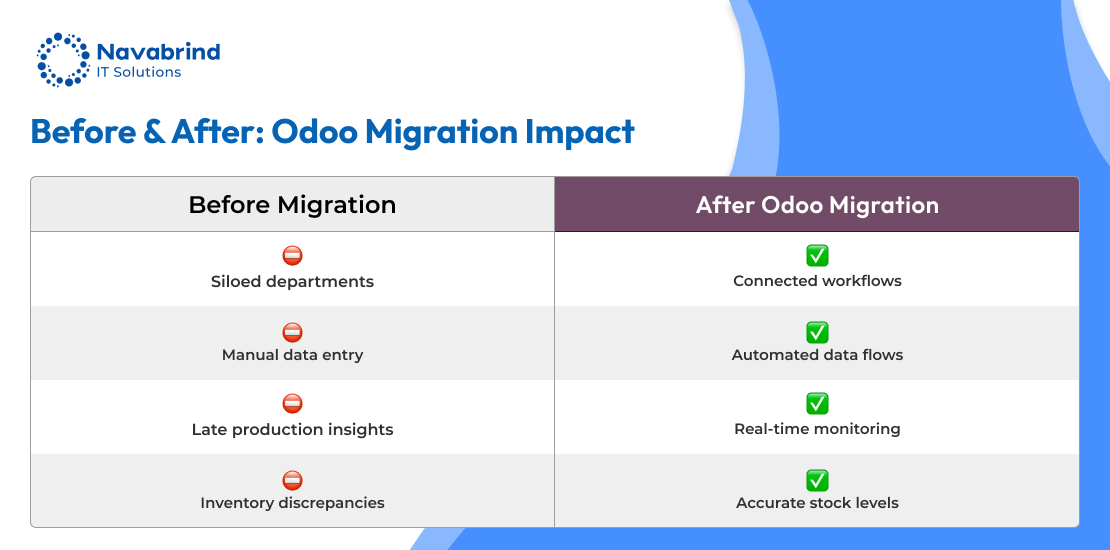
Legacy ERP systems operate through ageing infrastructure, fragmented databases, disconnected workflows, and limited integration capabilities. These platforms were designed for older manufacturing environments with lower operational complexity and limited digital connectivity. Modern ERP for manufacturers provides cloud-enabled Manufacturing ERP software that supports production visibility, automation, advanced analytics, supply chain coordination, inventory optimisation, and connected manufacturing operations. Modern ERP platforms improve collaboration between departments, strengthen operational agility, and support scalable manufacturing growth required for competitive UK markets in 2026.
4.How long does it take to migrate from a legacy ERP system?
ERP migration for manufacturing timelines depend on manufacturing complexity, operational size, data quality, integration requirements, custom workflows, and deployment scope. Mid-size manufacturers may complete ERP system upgrade projects within several months, whereas enterprise manufacturing organisations with multi-plant operations, large historical datasets, and extensive integrations may require longer implementation phases. Manufacturers adopting phased migration strategies reduce operational disruption by transitioning production environments, departments, and workflows in controlled stages during the ERP modernization process.
5.Why do manufacturers struggle with ERP system upgrades?
Manufacturers struggle with ERP system upgrade initiatives because migration projects involve operational restructuring, workforce adaptation, data migration, process standardisation, and production continuity planning. Legacy ERP systems contain years of customised workflows connected to procurement, production scheduling, warehousing, inventory management, finance, and compliance operations, making transformation projects operationally complex. Manufacturers also face concerns related to implementation expenses, production downtime, employee resistance, integration challenges, and historical data accuracy during ERP migration for manufacturing projects. Careful planning, phased deployment, workforce training, and selecting suitable Manufacturing ERP software help reduce migration risks and strengthen transformation outcomes.
Schedule a conversation with us now!
Related Articles








 Post
Post Post
Post