





What Is Conversion Rate Optimization (CRO)? 5 Tips to Get Started
- July 2, 2026
- Posted by: Abinay Subramaniam P
- Categories: Blog, Ecommerce Optimization, Website Optimization
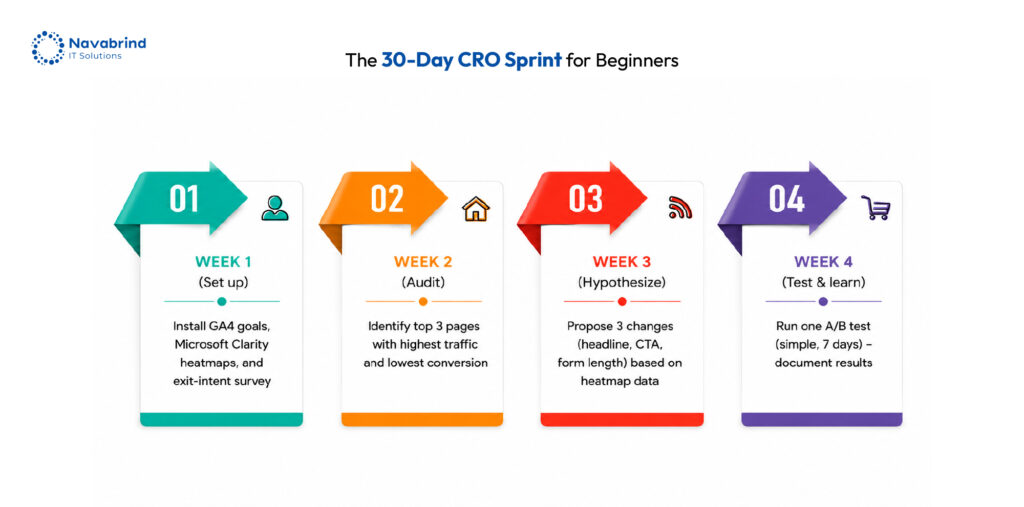
Traffic without conversion rate optimization creates expensive stagnation. Brands spend heavily on ads, SEO, influencers, and social campaigns, then lose revenue because visitors abandon pages without action. Clicks alone do not generate profit. Conversions do.
A small increase in website conversion optimization can reshape revenue performance faster than expanding ad budgets. If an ecommerce store lifts conversions from 1% to 2%, sales output doubles without increasing acquisition spend. That shift changes margins, customer acquisition economics, and long-term scalability.
This is why ecommerce optimization deserves boardroom attention. Smart brands no longer chase vanity metrics. They refine buyer journeys, reduce friction, improve trust signals, and strengthen purchase intent across product pages, checkout flows, and landing experiences.
This guide explores practical CRO tips backed by user behavior, analytics, and conversion psychology. You will learn conversion rate optimization techniques and CRO strategies that strengthen engagement, increase transactions, and improve e-commerce conversion optimization without wasting marketing spend.
What Is Conversion Rate Optimization And What It Means for Your Business
Conversion rate optimization is not about changing button colors or testing random headlines. CRO focuses on understanding visitor intent, removing buying friction, and guiding users toward profitable actions. Strong website conversion optimization turns passive browsing into measurable business growth.
A conversion can include purchases, newsletter sign-ups, add-to-cart actions, demo requests, free trial registrations, or completed contact forms. Even micro-conversions matter because they reveal buyer interest across the journey.
Your conversion rate equals total conversions divided by total visitors, multiplied by 100. Tracking this metric exposes revenue gaps hidden inside traffic reports. A store attracting 50,000 visitors with weak ecommerce optimization may earn less than a competitor with lower traffic and stronger CRO strategies.
Successful brands stop chasing endless clicks and focus on extracting higher value from existing visitors. That mindset drives sustainable profitability. Conversion rate optimization techniques work through continuous testing, behavioral analysis, UX refinement, and data-backed experimentation that compounds revenue gains month after month.

Before You Optimize: Building the Right CRO Foundation
Start With Data, Not Opinions
- Assumptions destroy conversion rate optimization performance. Teams redesign pages based on personal preference, internal feedback, or visual trends, then wonder why revenue stalls. Winning CRO strategies begin with behavioral evidence, not executive opinions.
- Google Analytics 4 exposes funnel leaks, engagement patterns, and traffic quality. Heatmap platforms like Hotjar and Microsoft Clarity reveal scrolling behavior, abandoned clicks, and hesitation points affecting website conversion optimization. Testing platforms such as VWO and Optimizely validate conversion rate optimization techniques through controlled experimentation.
- Customer surveys, exit polls, and review analysis uncover objections analytics cannot expose. Before changing layouts, headlines, or CTAs, brands must establish funnel tracking and measurable conversion goals. Ecommerce optimization without tracking creates random activity instead of measurable revenue growth.
Identify Where You're Losing Conversions
- Traffic loss rarely happens by accident. Visitors abandon pages when friction interrupts buying momentum. Effective conversion rate optimization starts by locating those friction points with accuracy.
- Funnel analysis exposes the stages where users disengage. Product pages with elevated exit rates may signal weak messaging, pricing confusion, missing trust indicators, or intent mismatch. Heatmaps reveal rage clicks, dead clicks, and navigation frustration that damage e-commerce conversion optimization performance.
- Cart abandonment remains one of the strongest indicators of revenue leakage. Hidden shipping costs, forced account creation, slow checkout flows, and distracting forms reduce purchase completion rates dramatically. Strong CRO strategies focus on removing hesitation before visitors leave.
- Segmentation strengthens website conversion optimization insights further. Mobile visitors behave differently from desktop users. Paid traffic converts differently from organic visitors. Returning buyers respond differently from first-time users. Conversion rate optimization techniques become profitable when businesses analyze user behavior through segmented data instead of generic averages.
Define Your CRO Hypothesis Framework
- Random testing wastes traffic, time, and revenue opportunities. Strong conversion rate optimization depends on disciplined experimentation guided by structured hypotheses.
- A profitable CRO hypothesis
includes four parts: observation, insight, proposed adjustment, and expected outcome. Example: users abandon checkout after shipping costs appear unexpectedly, so displaying delivery fees earlier may increase purchase completion rates. This approach transforms ecommerce optimization into measurable decision-making. - Prioritization matters because testing resources remain limited. Frameworks like ICE (Impact, Confidence, Ease) and PIE (Potential, Importance, Ease) help teams rank experiments based on business impact and implementation value. That structure prevents low-impact tests from consuming attention.
- Testing one variable at a time remains critical for reliable conclusions. Changing headlines, layouts, forms, and CTAs together creates distorted data with no actionable insight. Successful CRO strategies isolate variables, measure user response accurately, and scale winning conversion rate optimization techniques with confidence.
Website Conversion Optimization: Fix the Foundation First
Page Speed and Core Web Vitals
- Slow websites destroy purchase intent before visitors engage with products. Research across ecommerce optimization campaigns shows conversion rates decline sharply with each additional second of load delay. Users abandon experiences that feel sluggish, unstable, or unresponsive.
- Mobile performance now dominates website conversion optimization because smartphone traffic drives substantial ecommerce activity. A visually appealing store means little if pages lag during scrolling, product selection, or checkout interactions.
- Strong CRO strategies begin with technical refinement. Compressing images, enabling lazy loading, activating browser caching, and deploying CDN infrastructure reduce load pressure across devices. These adjustments strengthen browsing flow and increase engagement duration.
- Core Web Vitals play a major role in conversion rate optimization. Largest Contentful Paint (LCP) measures loading speed, First Input Delay (FID) tracks responsiveness, and Cumulative Layout Shift (CLS) evaluates visual stability. Poor scores create friction that interrupts buying momentum. Improving these metrics supports stronger e-commerce conversion optimization and healthier revenue performance.
Mobile Experience Optimization
- Mobile-first design influences revenue, not aesthetics. Shoppers browse, compare, and purchase products through smartphones throughout the day, making mobile experience a central part of conversion rate optimization.
- Weak mobile usability damages trust instantly. Tiny tap areas, unreadable text, cluttered layouts, and broken forms create frustration that pushes users away before purchase intent matures. Website conversion optimization depends on reducing cognitive effort across smaller screens.
- Thumb-zone design improves interaction flow by placing critical CTAs within natural reach areas. Product filters, add-to-cart buttons, navigation menus, and checkout actions should support comfortable mobile behavior instead of forcing awkward gestures.
- Checkout friction remains the largest obstacle in mobile ecommerce optimization. Long forms, forced registrations, slow payment gateways, and excessive input fields reduce transaction completion rates significantly. Strong CRO strategies focus on shortening the purchase journey, reducing distractions, and strengthening usability across the full mobile experience. Smart conversion rate optimization techniques remove friction before hesitation turns into abandonment.
Navigation and Site Architecture
- Visitors should never struggle to locate products, categories, or buying information. Confusing navigation damages website conversion optimization because users leave when discovery feels complicated.
- The three-click principle still matters in ecommerce optimization. Shoppers expect fast access to collections, product pages, pricing, and checkout pathways. Excessive navigation layers increase abandonment and weaken engagement depth.
- Mega-menus require balance. Overloaded category structures overwhelm visitors, yet hiding important collections damages product visibility. Strong CRO strategies organize navigation around shopper intent, purchase behavior, and browsing patterns instead of internal company structures.
- Search functionality acts as a major conversion multiplier. Visitors using on-site search frequently display stronger purchase intent than casual browsers. Optimized search experiences with predictive suggestions, typo tolerance, category relevance, and refined filtering improve e-commerce conversion optimization performance substantially.
- Breadcrumb navigation also supports conversion rate optimization techniques by reducing confusion and helping visitors retrace browsing paths without restarting sessions. Small usability improvements across site architecture create measurable gains in engagement, retention, and completed transactions.
Trust Signals and Social Proof Placement
- Trust influences conversion decisions faster than design aesthetics. Visitors hesitate when credibility signals appear weak, hidden, or inconsistent across the buying journey. Strong website conversion optimization depends on reducing uncertainty immediately.
- Trust indicators create the strongest impact when positioned above the fold, beside purchase CTAs, and throughout checkout flows. Placement matters because shoppers seek reassurance at moments of hesitation. Effective CRO tips include showcasing verified reviews, payment security badges, money-back guarantees, media mentions, and satisfaction policies near transactional actions.
- Not all trust signals carry equal influence. Customer reviews and user-generated content strengthen authenticity. Security certifications reduce payment anxiety. Guarantees lower perceived risk. Press recognition strengthens brand legitimacy during evaluation stages.
- Poor placement weakens conversion rate optimization by cluttering interfaces and distracting visitors from purchase actions. CRO strategies should guide attention, not overwhelm users with excessive badges or repetitive messaging.
- Real-time social proof adds urgency to e-commerce conversion optimization. Notifications such as “12 people viewing this product” or “38 sold today” reinforce demand and encourage faster decision-making.

E-Commerce Optimization: Converting Visitors Into Buyers
Product Page Optimization
- Product pages decide whether visitors purchase or leave. Strong conversion rate optimization begins with product experiences that answer questions, reduce doubt, and reinforce buying confidence within seconds.
- Hero visuals carry enormous influence in ecommerce optimization because online shoppers cannot physically examine products. High-quality images, zoom functionality, lifestyle photography, and short-form videos replace the in-store experience and strengthen purchase intent.
- Product titles and descriptions should focus on buyer motivation, usability, outcomes, and differentiation instead of stuffing keywords mechanically. Website conversion optimization improves when messaging explains value quickly and persuasively.
- Pricing presentation matters equally. Hidden fees damage trust instantly. Visible discounts, comparison pricing, financing options, and value framing strengthen perceived savings during evaluation stages.
- Size charts, compatibility guides, ingredient breakdowns, and specification tables remove hesitation that blocks transactions. Above-the-fold sections should display product visuals, pricing, reviews, availability, and primary CTAs immediately.
- Scarcity tactics support e-commerce conversion optimization when used responsibly. Limited inventory alerts and time-sensitive offers encourage action without creating manipulative pressure.
Category and Collection Page Optimization
- Category pages shape product discovery and browsing momentum. Poor organization increases drop-offs, even when products match visitor intent perfectly. Effective website conversion optimization depends on guiding users toward relevant products without friction.
- Filtering and sorting tools influence buying behavior far beyond navigation convenience. Shoppers expect fast access to size ranges, pricing tiers, colors, ratings, and product availability. Smart CRO strategies reduce browsing fatigue and accelerate product selection.
- Product card design determines whether users continue deeper into the funnel. High-performing cards include compelling product imagery, concise naming, visible pricing, review ratings, and promotional highlights that encourage clicks toward product pages.
- Pagination and infinite scroll influence engagement differently depending on browsing behavior. Infinite scrolling supports exploratory shopping sessions, whereas pagination improves orientation and footer accessibility. Conversion rate optimization techniques should align page structure with user intent and catalog complexity.
- Personalized category experiences strengthen ecommerce optimization by adapting product recommendations based on browsing history, purchase patterns, and visitor interests. Tailored product discovery increases relevance, engagement duration, and conversion potential across category journeys
Cart Page Optimization
- The cart page represents one of the highest-impact opportunities in e-commerce conversion optimization, yet brands frequently ignore its revenue potential. Visitors reaching the cart already display purchase intent. Friction at this stage destroys profitable transactions.
- Strong CRO strategies reduce abandonment by reinforcing purchase progress and minimizing uncertainty. Progress indicators reassure users about remaining checkout steps, saved-cart functionality supports return visits, and exit-intent recovery campaigns help recover abandoning shoppers before sessions end.
- Cross-sells and upsells perform well when recommendations feel relevant and supportive instead of disruptive. Complementary products, bundle suggestions, and low-cost add-ons can increase order value without interrupting the checkout journey.
- Transparent pricing plays a decisive role in conversion rate optimization. Unexpected delivery fees, taxes, or service charges introduced late in the process create distrust and abandonment. Visitors expect pricing visibility before final checkout stages.
- Fast cart editing strengthens website conversion optimization further. One-click quantity adjustments, quick product removal, and responsive updates reduce frustration and preserve purchase momentum throughout the cart experience.
Checkout Optimization
- Checkout pages carry enormous revenue pressure because this stage determines whether purchase intent becomes completed revenue. Weak checkout experiences erase the impact of successful ecommerce optimization across the rest of the funnel.
- Guest checkout remains one of the strongest CRO tips for reducing abandonment. Forced account creation interrupts momentum, increases effort, and introduces unnecessary resistance during high-intent moments. Buyers want speed and convenience.
- Form simplification plays a central role in conversion rate optimization techniques. Unnecessary input fields increase fatigue and create hesitation. Checkout flows should request only information required for transaction completion.
- Payment flexibility strengthens website conversion optimization across diverse audiences. Digital wallets, buy-now-pay-later services, UPI options, credit cards, and region-focused payment methods increase purchase accessibility and reduce checkout exits.
- Progress indicators improve confidence during multi-step checkout flows by helping users understand remaining actions. Reassurance messaging around security, delivery timelines, and return policies further supports trust during final purchase decisions.
- Post-purchase upsells can increase revenue without disrupting order confirmation. Relevant accessory suggestions, subscription offers, and loyalty incentives extend customer value after the transaction is complete.
Conversion Rate Optimization Techniques: The Tactical Playbook
A/B Testing and Multivariate Testing
- Testing removes guesswork from conversion rate optimization. Instead of relying on assumptions, brands use experimentation to identify which experiences generate stronger purchase behavior and engagement.
- High-traffic pages deserve testing priority because they influence revenue impact faster. Product pages, checkout flows, landing pages, and cart experiences generate valuable data for ecommerce optimization initiatives.
- CTA wording can shift buyer response significantly. “Buy Now,” “Add to Bag,” and “Get Yours Today” create different emotional reactions and urgency levels. Hero banners deserve equal attention. Offer-focused messaging may outperform lifestyle imagery in one market, yet product-focused visuals may convert stronger elsewhere.
- Statistical validity matters in website conversion optimization. Ending tests prematurely creates misleading conclusions and weakens decision quality. Strong CRO strategies depend on patience, clean data, and measurable sample sizes.
- A testing backlog keeps conversion rate optimization techniques moving consistently. Teams should maintain a prioritized queue of experiments across copy, design, UX, pricing presentation, and checkout interactions to support ongoing e-commerce conversion optimization growth.
Personalization as a Conversion Lever
- Personalization increases relevance across the buying journey, making visitors feel understood instead of treated like anonymous traffic. Strong ecommerce optimization uses personalization to strengthen engagement and purchase intent.
- Rule-based personalization follows predefined conditions such as location, device type, or referral source. AI-driven personalization analyzes browsing patterns, product interactions, and buying behavior to recommend relevant experiences dynamically.
- Geo-targeting improves website conversion optimization by adapting currency, shipping information, language preferences, and promotional messaging based on visitor location. Localized experiences reduce friction and increase trust during product evaluation.
- Behavioral personalization strengthens CRO strategies through recently viewed products, tailored recommendations, and complementary item suggestions. Returning visitors respond positively when stores remember browsing preferences without becoming intrusive.
- Triggered emails connected to on-site activity extend conversion rate optimization beyond the website itself. Cart reminders, browse abandonment emails, replenishment campaigns, and personalized product suggestions encourage visitors to continue interrupted purchase journeys and support stronger e-commerce conversion optimization outcomes.
Copywriting and Messaging Optimization
- Words shape buying decisions faster than design alone. Strong messaging removes hesitation, reinforces value, and guides visitors toward action throughout the conversion funnel.
- The AIDA framework: Attention, Interest, Desire, and Action that remains one of the strongest conversion rate optimization techniques for product pages and landing experiences. Headlines capture attention, persuasive messaging builds desire, and action-focused CTAs encourage conversions.
- Website conversion optimization depends on readability. Visitors scan pages rapidly, making structured headers, concise bullet points, and emphasis formatting valuable for guiding attention toward important information.
- Benefit-focused copy performs strongly when buyers care about outcomes, convenience, or transformation. Feature-focused messaging works better for technical products requiring detailed evaluation. Strong CRO strategies align messaging style with buyer intent.
- Objection handling also influences ecommerce optimization. Shipping concerns, refund questions, quality doubts, and compatibility fears should be addressed before they interrupt purchase momentum.
- Microcopy carries surprising influence in e-commerce conversion optimization. Button labels, error messages, checkout instructions, and form guidance shape user confidence during transactional moments.
Visual Hierarchy and CTA Optimization
- Visitors do not read websites sequentially. Eye movement follows predictable scanning behavior, making visual hierarchy a major factor in conversion rate optimization performance.
- F-pattern and Z-pattern layouts guide attention toward headlines, visuals, product information, and CTAs naturally. Strong website conversion optimization places conversion-focused elements within these visual pathways instead of burying them beneath cluttered layouts.
- CTA performance depends on visibility and contrast. Buttons should stand apart from surrounding elements through spacing, hierarchy, positioning, and visual emphasis. Weak CTA placement reduces engagement regardless of product quality or promotional messaging.
- The concept of “above the fold” has evolved because users scroll naturally across devices. Successful ecommerce optimization focuses on maintaining engagement throughout the page instead of forcing all persuasive content into the first screen view.
- Reducing visual noise remains one of the strongest CRO tips available. Excessive banners, competing offers, unnecessary animations, and overcrowded layouts divide attention and weaken conversion-focused actions. Strong CRO strategies guide visitors toward decisions without overwhelming them visually.
Urgency, Scarcity, and Behavioral Triggers
- Behavioral psychology plays a major role in conversion rate optimization because shoppers delay decisions when urgency feels absent. Fear of missing out, loss aversion, and decision fatigue influence purchase timing across ecommerce experiences.
- Urgency works when messaging reflects legitimate demand or inventory limitations. Ethical scarcity strengthens trust and encourages faster action without manipulating visitors deceptively. False countdowns and fake inventory alerts damage brand credibility quickly.
- Countdown timers perform well during seasonal campaigns, flash sales, or product launches tied to authentic deadlines. Poorly executed timers weaken ecommerce optimization by creating skepticism instead of motivation.
- Inventory-based scarcity strengthens website conversion optimization when connected to actual stock levels. Messages such as “Only 3 remaining” or “Selling quickly today” encourage commitment during high-intent moments.
- Strong CRO strategies use urgency to support decision-making rather than pressure visitors aggressively. Conversion rate optimization techniques should reinforce trust, relevance, and buying confidence throughout the purchasing journey.
Live Chat and Conversational Commerce
- Live chat shortens the gap between hesitation and purchase decisions. Visitors frequently abandon carts because unanswered questions create uncertainty around pricing, delivery, sizing, returns, or compatibility. Conversational support resolves those concerns quickly.
- Human chat agents strengthen website conversion optimization during high-value purchase journeys requiring reassurance or product guidance. Fast responses increase trust and reduce friction across the buying experience.
- AI chatbots support ecommerce optimization outside business hours by handling repetitive inquiries, tracking orders, recommending products, and assisting visitors during checkout stages. This maintains engagement even when support teams remain offline.
- Proactive chat triggers strengthen CRO strategies when timed intelligently. Conversations initiated during exit intent, prolonged inactivity, or repeated checkout hesitation can recover abandoning visitors before sessions end.
- Conversation transcripts generate valuable conversion rate optimization insights. Recurring objections, product confusion, and support requests expose friction points across the funnel. Businesses can transform these insights into stronger conversion rate optimization techniques, refined messaging, and improved e-commerce conversion optimization experiences.

CRO Strategies: Long-Term Frameworks That Compound
The Conversion Funnel Optimization Strategy
- Strong conversion rate optimization examines the full buyer journey instead of isolated pages. Visitors move through awareness, consideration, intent, purchase, and retention stages before becoming profitable long-term customers. Weakness at any stage limits total revenue potential.
- Top-of-funnel experiences shape the quality of traffic entering the journey. Paid ads, landing pages, social campaigns, and promotional offers influence visitor expectations before product evaluation begins. Poor alignment at this stage weakens ecommerce optimization across the rest of the funnel.
- Website conversion optimization improves when businesses identify leaks at each customer stage. Awareness pages should capture attention quickly. Consideration pages must answer objections and reinforce trust. Intent-focused pages should reduce friction and strengthen urgency. Checkout experiences must remove hesitation entirely.
- Retention deserves equal attention because returning customers convert faster and spend higher amounts over time. Strong CRO strategies treat funnel optimization as an interconnected system rather than isolated design changes. Small improvements across multiple stages compound into measurable e-commerce conversion optimization gains.
Voice of Customer (VoC) Strategy
- Customers reveal conversion insights daily through reviews, surveys, support conversations, and feedback channels. Brands that ignore this information create messaging based on assumptions instead of buyer psychology.
- Review mining strengthens conversion rate optimization by exposing recurring objections, frustrations, emotional triggers, and purchase motivations. Customers explain why they purchased, what nearly stopped them, and which benefits influenced decision-making. These insights fuel stronger CRO strategies and sharper messaging.
- Post-purchase surveys provide valuable ecommerce optimization data when questions focus on decision drivers, hesitation points, and buying confidence. Responses uncover friction invisible inside analytics dashboards.
- Using customer language across headlines, product descriptions, CTAs, and landing pages strengthens website conversion optimization because messaging mirrors how buyers naturally think and speak. Familiar phrasing increases relevance and trust during evaluation stages.
- Voice of Customer research should feed a continuous testing pipeline. Recurring objections become opportunities for conversion rate optimization techniques, UX improvements, trust-building adjustments, and stronger e-commerce conversion optimization experiments across the funnel.
Retention and Repeat Purchase Optimization
- Retention remains one of the highest-value growth opportunities in ecommerce optimization because acquiring repeat customers costs far less than attracting first-time buyers repeatedly. Returning buyers already trust the brand, understand the purchase experience, and convert faster.
- Post-purchase communication plays a major role in conversion rate optimization beyond the initial transaction. Follow-up emails containing product education, usage guidance, replenishment reminders, and personalized recommendations strengthen engagement after checkout.
- Loyalty programs encourage repeat purchasing behavior through rewards, exclusive offers, referral incentives, and membership advantages. These programs increase customer lifetime value and reinforce long-term retention.
- Win-back campaigns strengthen website conversion optimization by re-engaging inactive buyers before they disengage permanently. Personalized offers, product recommendations, restock notifications, and seasonal promotions help recover dormant customers efficiently.
- Strong CRO strategies recognize that revenue growth does not stop after checkout. Repeat purchases, loyalty engagement, and customer retention contribute significantly to sustainable e-commerce conversion optimization and long-term profitability.
Landing Page Strategy for Paid Traffic
- Sending paid traffic to a homepage weakens conversion rate optimization because visitors arrive without focused direction. Generic navigation creates distraction instead of guiding users toward campaign goals.
- Dedicated landing pages strengthen ecommerce optimization by aligning messaging, visuals, offers, and CTAs with the traffic source driving the visit. Visitors clicking a promotion expect continuity between the ad experience and the destination page.
- Message match plays a decisive role in website conversion optimization. Headlines, imagery, promotional language, and offers should reinforce the promise introduced in advertisements. Disconnects create confusion and increase bounce rates quickly.
- Landing pages should remove unnecessary navigation, competing distractions, and unrelated content. Strong CRO strategies focus attention around one primary action, whether that action involves purchasing, registering, downloading, or requesting information.
- Testing speed matters equally. Brands running frequent landing page experiments identify profitable conversion rate optimization techniques faster than competitors relying on static campaigns. Continuous testing across layouts, offers, copy, visuals, and CTAs accelerates learning and strengthens paid acquisition performance.
Social Proof Strategy at Scale
- Social proof influences buyer confidence because shoppers trust peer experiences more than promotional claims. Strong ecommerce optimization integrates credibility signals throughout the purchase journey instead of treating reviews as secondary elements.
- Review generation requires consistent systems. Post-purchase email timing, incentive campaigns, SMS reminders, and simplified review submission processes help brands collect authentic feedback continuously. A growing review base strengthens website conversion optimization and purchase confidence.
- User-generated content acts as conversion fuel across product pages, paid ads, and social campaigns. Real customer photos, videos, testimonials, and unboxing content reinforce authenticity and reduce uncertainty during buying decisions.
- Case studies and testimonials perform exceptionally well for higher-consideration purchases involving financial commitment or longer evaluation cycles. Detailed success stories strengthen trust and reduce perceived risk.
- Influencer content extends value beyond social media platforms. Repurposing creator videos, product demonstrations, and customer experiences across landing pages and product pages supports stronger CRO strategies and increases e-commerce conversion optimization performance.
E-Commerce Conversion Optimization: Platform-Specific Considerations
Shopify CRO
- Shopify stores succeed when brands move beyond default themes and generic layouts. Conversion rate optimization on Shopify requires refining buyer journeys, reducing friction, and extending platform capabilities through focused customization.
- Shopify’s native framework creates limitations around checkout flexibility, filtering depth, and advanced personalization. Businesses overcome these gaps through app integrations, custom sections, and optimized theme development aligned with CRO strategies.
- Review platforms, upsell applications, sticky cart tools, and landing page builders strengthen website conversion optimization by improving trust, engagement, and purchase flow. Smart app selection matters because excessive installations damage speed and weaken ecommerce optimization performance.
- Shopify Plus unlocks deeper checkout customization opportunities, allowing brands to refine payment flows, streamline form experiences, and introduce conversion-focused upsells during checkout stages. Successful conversion rate optimization techniques on Shopify balance usability, speed, and persuasive buying experiences without overloading visitors visually.
Magento / Adobe Commerce CRO
- Adobe Commerce gives businesses extensive control over ecommerce optimization through flexible architecture and advanced customization capabilities. Brands handling complex catalogs, multi-region operations, and personalized buying journeys benefit significantly from this flexibility.
- Magento supports conversion rate optimization through customized checkout flows, personalized promotions, advanced segmentation, and tailored product discovery experiences. Businesses can create highly refined buyer journeys aligned with audience behavior and purchase intent.
- The extension ecosystem strengthens website conversion optimization through integrations for A/B testing, behavioral analytics, personalized recommendations, and customer tracking. These tools support data-backed CRO strategies across product pages, checkout flows, and campaign landing experiences.
- Performance remains a critical challenge within Magento environments. Heavy extensions, unoptimized databases, and bloated themes reduce load speed and damage e-commerce conversion optimization outcomes. Strong hosting infrastructure, caching configuration, image optimization, and code refinement remain essential for sustaining conversion-focused performance across high-traffic stores.
WooCommerce CRO
- WooCommerce gives businesses flexibility and ownership, making conversion rate optimization highly customizable across storefront experiences. Success depends on balancing plugin functionality, performance stability, and streamlined user journeys.
- The WooCommerce ecosystem supports ecommerce optimization through review systems, cart recovery tools, upsell engines, analytics integrations, heatmap platforms, and landing page builders. Selecting lightweight, conversion-focused plugins strengthens performance and reduces technical friction.
- Checkout refinement plays a major role in website conversion optimization for WooCommerce stores. Businesses can simplify forms, remove unnecessary fields, enable guest checkout, and improve payment experiences through native settings and third-party extensions.
- Hosting infrastructure remains one of the strongest CRO tips for WooCommerce growth. Slow hosting environments create latency during browsing, checkout, and database queries, reducing purchase completion rates significantly. Strong server performance, caching layers, CDN integration, and optimized themes support faster load times and stronger e-commerce conversion optimization performance across devices.

Measuring CRO Success: Metrics That Matter
- Conversion rate optimization succeeds when businesses measure metrics tied to revenue growth instead of surface-level engagement. Data should expose buying behavior, funnel friction, and profit impact across the customer journey.
- Primary performance indicators include overall conversion rate, add-to-cart rate, and checkout completion rate. These metrics reveal how effectively website conversion optimization guides visitors from product discovery toward completed purchases.
- Secondary measurements strengthen ecommerce optimization analysis further. Average order value, revenue per visitor, and page-level bounce rates uncover opportunities for pricing refinement, upsell improvements, and content adjustments. Micro-conversions deserve attention as well because email sign-ups, wishlist additions, and product video engagement indicate purchase intent before transactions occur.
- Vanity metrics create dangerous distractions. High traffic, social engagement, or inflated impressions mean little when revenue remains stagnant. Strong CRO strategies focus on measurable commercial outcomes instead of appearance-based success indicators.
- A conversion-focused dashboard should connect conversion rate optimization techniques with business impact, test outcomes, customer behavior, and profitability trends. Weekly reviews identify active friction points, monthly analysis tracks testing performance, and quarterly evaluations refine long-term e-commerce conversion optimization direction.
Common CRO Mistakes That Silently Kill Conversions
- Conversion rate optimization fails when businesses chase assumptions instead of evidence. One of the costliest mistakes involves ending tests before statistical validity is reached. Early spikes create misleading confidence, causing teams to scale decisions based on unstable data instead of reliable conversion patterns.
- Another major ecommerce optimization mistake focuses attention exclusively on high-traffic pages while neglecting high-intent experiences such as product pages, carts, and checkout flows. Traffic volume means little if purchase-driven visitors encounter friction during critical decision stages.
- Blindly copying competitor layouts, offers, or CRO strategies creates weak results because audiences behave differently across brands, price points, and industries. Website conversion optimization requires audience understanding, behavioral analysis, and customer insight rather than imitation.
- Businesses also weaken conversion rate optimization by treating CRO like a visual redesign project. Attractive interfaces cannot compensate for weak messaging, poor usability, or broken funnel experiences.
- Post-purchase experiences deserve equal attention because retention influences long-term e-commerce conversion optimization success significantly. Another damaging mistake involves changing multiple variables simultaneously, making test results impossible to interpret accurately.
- The largest mistake of all? Stopping after one successful experiment. Sustainable CRO tips rely on continuous testing, refinement, and iteration that compound revenue gains over time.
Frequently Asked Questions
1.What is conversion rate optimization and why does it matter?
Conversion rate optimization focuses on increasing the percentage of visitors who complete valuable actions on a website. These actions may include purchases, sign-ups, bookings, or form submissions. Strong conversion rate optimization helps businesses generate higher revenue from existing traffic instead of increasing advertising spend constantly. Effective CRO strategies reduce friction, improve user experience, strengthen trust, and guide visitors toward purchase decisions with higher confidence.
2.How to improve website conversion rate without increasing traffic?
Website conversion optimization improves when businesses refine buyer journeys instead of chasing additional visitors. Faster page speed, stronger product messaging, mobile usability improvements, simplified checkout flows, trust signals, and persuasive CTAs contribute significantly to ecommerce optimization. Conversion rate optimization techniques such as A/B testing, heatmap analysis, and behavioral tracking reveal friction points that block conversions and reduce purchase momentum.
3.What are the most effective CRO strategies for beginners?
Beginner-friendly CRO tips include improving page speed, simplifying navigation, strengthening product descriptions, refining CTAs, reducing checkout friction, and adding customer reviews across key pages. Businesses should start with high-intent pages such as product pages, carts, and checkout flows because these areas influence revenue directly. Strong CRO strategies rely on measurable testing instead of assumptions or design preferences.
4.How does A/B testing help in conversion rate optimization?
A/B testing compares two variations of a page element to identify which version generates stronger performance. Businesses can test headlines, CTA text, layouts, product visuals, pricing displays, and checkout experiences using controlled experiments. This process strengthens website conversion optimization because decisions rely on user behavior and measurable outcomes instead of opinions. Consistent testing supports long-term e-commerce conversion optimization growth through continuous refinement.
5.Why is my ecommerce conversion rate low and how do I fix it?
Low ecommerce conversion rates usually result from friction, weak trust signals, poor mobile usability, slow load speed, confusing navigation, or complicated checkout experiences. Visitors abandon stores when product information feels incomplete or pricing lacks transparency. Effective ecommerce optimization starts with funnel analysis, heatmap reviews, session recordings, and customer feedback. Businesses improve conversions by refining UX, simplifying purchase flows, strengthening messaging, and applying data-backed conversion rate optimization techniques consistently.
Schedule a conversation with us now!
written by

Abinay Subramaniam P
ERP Project Manager
Abinay Subramaniam P is a Project Manager at Navabrind IT Solutions with a proven track record across several verticals, including Manufacturing, Publishing, and IT. He excels in high‑pressure, fast‑paced software development environments, consistently delivering solutions that exceed customer expectations. Abinay brings strong expertise in negotiation, client engagement, and team management, ensuring smooth project execution and stakeholder alignment. He is trained in PMP and holds the Certified Scrum Master (CSM) credential, combining structured project management practices with agile methodologies.
Related Articles
-
 Post
PostOdoo 20 for Manufacturing: What’s New and How It Helps Manufacturers
Odoo 20 for Manufacturing: What’s New and How It Helps Manufacturers October 8, 2026 Posted by: Jaishree Jayabal Singh Category: Manufacturing No Comments Odoo has always been the go-to ERP for small and medium-sized businesses. In the last couple of years, the annual Odoo versions have seen an increasing infusion of AI-powered chatbots, which enable -
 Post
PostERP Data Migration Services for Manufacturers: Why Odoo is the Best Fit
ERP Data Migration Services for Manufacturers: Why Odoo is the Best Fit September 9, 2025 Posted by: Dania Sibionna Philemon Categories: Blog, Odoo No Comments Odoo has become a top choice for manufacturing companies looking for reliable ERP solutions. The platform serves millions of users worldwide and expects to continue its aggressive market growth. The -
Post
Is Odoo Worth It for Small Businesses in 2026?
Is Odoo Worth It for Small Businesses in 2026? August 26, 2026 Posted by: Jaishree Jayabal Singh Categories: Blog, ERP for Small Business, Odoo Reviews & Comparisons No Comments Why Odoo is a differentiator in 2026 For small businesses, choosing an ERP system is an investment that must deliver measurable value. Odoo has gained attention

written by
Abinay Subramaniam P
ERP Project Manager
Abinay Subramaniam P is a Project Manager at Navabrind IT Solutions with a proven track record across several verticals, including Manufacturing, Publishing, and IT. He excels in high‑pressure, fast‑paced software development environments, consistently delivering solutions that exceed customer expectations. Abinay brings strong expertise in negotiation, client engagement, and team management, ensuring smooth project execution and stakeholder alignment. He is trained in PMP and holds the Certified Scrum Master (CSM) credential, combining structured project management practices with agile methodologies.
How can we help you?
Get in touch with a solutions consultant that can share best practices and help solve specific challenges.