Product catalogs no longer sit inside one sales platform. Brands now manage product information across ecommerce stores, marketplaces, mobile apps, distributor portals, social commerce channels, and retail systems at once. As SKU counts grow, scattered spreadsheets and disconnected records create expensive operational gaps. Missing attributes, outdated descriptions, duplicate entries, and inconsistent pricing damage buyer trust and reduce conversions.
This challenge explains why the benefits of product information management now influence revenue growth, catalog accuracy, and digital expansion. Companies adopting PIM technology gain stronger control over PIM data, faster catalog updates, and sharper PIM marketing execution across channels.
A centralized PIM database changes how teams manage product information. Instead of reacting to data issues after listings go live, businesses create a proactive workflow that supports accuracy, governance, localization, and faster launches. This article explores the top benefits of product information management and why brands investing in PIM technology are gaining stronger visibility, higher operational consistency, and faster ecommerce scalability.
What Is Product Information Management (And Why It’s Misunderstood)?
Product Information Management is far beyond a storage platform for product details. A PIM system acts as a centralized environment that organizes, enriches, validates, and distributes product information across sales and marketing channels. Despite rising adoption, many businesses still confuse a PIM database with spreadsheets, ERP records, or ecommerce catalogs.
A spreadsheet stores fragmented entries. A product catalog displays selling information. PIM technology connects product information, digital assets, attributes, localization content, pricing, taxonomy, and channel-ready formatting inside one controlled ecosystem. This structure strengthens consistency across marketplaces, websites, retail systems, and distributor networks.
The benefits of product information management extend across departments. Marketing teams improve PIM marketing campaigns with richer content. Ecommerce teams manage SKU expansion without operational chaos. Sales teams access trustworthy PIM data during buyer interactions. Operations teams reduce catalog errors and duplication. Leadership gains stronger visibility into product readiness, launch timelines, and channel performance through a connected PIM database that supports scalable commerce growth.
The Core Problem: What Bad Product Information Actually Costs You
Disconnected product information creates revenue leakage long before businesses notice the damage. Inconsistent descriptions, missing attributes, outdated pricing, and mismatched specifications across marketplaces and ecommerce platforms confuse buyers and increase cart abandonment. When customers receive products that differ from online listings, return rates rise and brand credibility declines.
Without centralized PIM technology, teams spend valuable time updating PIM data across spreadsheets, supplier files, ecommerce systems, and retail channels. This repetitive process slows product launches, creates duplication, and increases publishing errors that impact sales performance.
Poor data quality weakens customer confidence. Buyers expect accurate product information across touchpoints, especially during online purchasing decisions. Even minor inconsistencies can influence trust and reduce repeat purchases.
Research across ecommerce sectors shows inaccurate product information contributes significantly to product returns, especially in fashion, electronics, and retail categories. The benefits of product information management become visible when businesses centralize data governance, improve consistency, and maintain a reliable PIM database that supports stronger buying experiences and scalable PIM marketing campaigns.
The Key Benefits of Product Information Management
Single Source of Truth for All Product Data
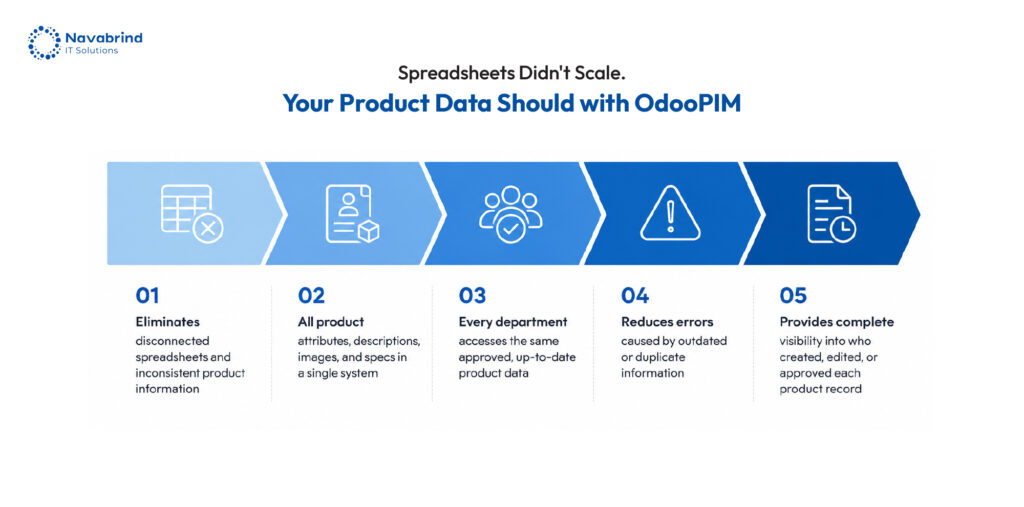
One of the leading benefits of product information management comes from creating a centralized source for product information. When businesses manage catalogs through disconnected spreadsheets, supplier files, and platform-based edits, version conflicts become unavoidable. Teams publish inconsistent specifications, outdated pricing, and incomplete descriptions that create operational confusion across channels.
A centralized PIM database removes this fragmentation by connecting PIM data inside one governed environment. Marketing, ecommerce, sales, procurement, and logistics teams access trusted product information without relying on duplicate records or isolated workflows. This consistency strengthens collaboration and improves catalog governance across departments.
PIM technology reduces costly launch errors by validating attributes, monitoring data completeness, and controlling publishing workflows before products go live. Teams spend less time correcting mistakes after launch and gain stronger control over content quality from the beginning.
For growing brands, centralized product information creates operational stability that supports expansion, catalog accuracy, faster updates, and stronger PIM marketing performance across commerce channels.
Faster Time-to-Market
Launching products through disconnected systems slows revenue growth and creates operational bottlenecks. Teams managing product information across spreadsheets, supplier documents, and channel-based edits face delays during onboarding, approvals, enrichment, and publishing. These inefficiencies increase launch timelines and reduce market responsiveness.
One of the strongest benefits of product information management lies in accelerating product launches through centralized workflows. PIM technology organizes PIM data inside one controlled environment, allowing teams to enrich attributes, validate content, manage approvals, and distribute product information across channels without repetitive tasks.
A centralized PIM database reduces dependency on fragmented communication between ecommerce, marketing, merchandising, and operations teams. Product launches move faster because teams work from synchronized data rather than disconnected records.
Businesses using PIM technology can publish updated product information across ecommerce stores, marketplaces, and retail platforms within hours instead of waiting days or weeks. Faster onboarding improves campaign readiness, supports seasonal launches, strengthens PIM marketing execution, and creates stronger opportunities for revenue generation across digital commerce channels.
Consistent Omnichannel Experience
Customers interact with brands across ecommerce websites, mobile apps, marketplaces, social commerce platforms, retail systems, and print catalogs. Inconsistent product information across these touchpoints creates confusion, weakens trust, and disrupts purchasing decisions. Buyers expect identical specifications, pricing, descriptions, and media regardless of the channel they use.
One of the valuable benefits of product information management comes from maintaining consistency across distributed commerce environments. A centralized PIM database organizes PIM data and distributes channel-ready product information from one connected source. This process reduces inconsistencies and strengthens brand reliability across customer touchpoints.
PIM technology supports channel-based content customization without forcing teams to recreate product listings repeatedly. Businesses can tailor titles, descriptions, attributes, and media formats for marketplaces, mobile commerce, retail catalogs, and ecommerce stores from one centralized workflow.
Consistent product information improves customer confidence during cross-device shopping journeys. Buyers move between platforms expecting continuity in content quality and product accuracy. Strong PIM marketing execution supported by reliable PIM data helps brands deliver connected experiences that improve engagement, retention, and conversion performance.
Improved Customer Experience and Reduced Returns
Accurate product information shapes buyer confidence before a purchase even happens. Missing specifications, inconsistent sizing, outdated images, and incomplete descriptions create uncertainty that leads to abandoned carts, negative reviews, and product returns. Customers expect detailed content that helps them make informed buying decisions without confusion.
One of the measurable benefits of product information management comes from improving content quality across commerce channels. PIM technology organizes PIM data into a centralized framework that supports enriched descriptions, technical attributes, high-quality media, comparison details, and multilingual content from one connected source.
A centralized PIM database allows businesses to maintain consistent product information across ecommerce platforms, marketplaces, and retail systems. Buyers receive trustworthy details regardless of the channel they use, which strengthens confidence during the purchasing process.
Accurate product information reduces return rates by setting realistic expectations before checkout. Customers understand product dimensions, materials, compatibility, and usage details with greater confidence. Stronger PIM marketing execution supported by reliable PIM data improves post-purchase satisfaction, strengthens brand perception, and supports long-term customer retention across competitive digital commerce environments.
Scalability for Growing Catalogs
Managing a small catalog through spreadsheets may appear manageable during early growth stages. Once businesses expand into thousands of SKUs, product variants, regional catalogs, and multilingual listings, disconnected files create operational instability. Duplicate records, inconsistent attributes, and outdated product information slow expansion and increase publishing errors across channels.
One of the long-term benefits of product information management comes from supporting scalable catalog operations. PIM technology organizes growing volumes of PIM data inside a centralized environment designed to handle product complexity across ecommerce, retail, wholesale, and marketplace ecosystems.
A centralized PIM database supports variant management, localization, supplier synchronization, taxonomy governance, and attribute mapping without creating fragmented workflows. Teams gain stronger control over expanding product information without increasing operational confusion.
As businesses enter global markets and launch larger catalogs, scalable PIM technology supports faster onboarding, consistent data governance, and channel-ready content distribution. Strong PIM marketing execution depends on organized PIM data that adapts to changing commerce demands, product expansion, and multilingual customer experiences without disrupting operational performance.
Benefits of an Integrated Product Information Management System
An integrated Product Information Management system connects product information across ERP platforms, DAM systems, ecommerce channels, supplier networks, marketplaces, and MDM environments through one connected ecosystem. Instead of managing disconnected applications with fragmented records, businesses create a synchronized flow of PIM data that supports accuracy, governance, and operational consistency.
Without integration, teams transfer product information between systems through spreadsheets, imports, exports, and repetitive updates. This fragmented workflow increases delays, duplication, and publishing mistakes that impact customer experience and revenue performance.
Integrated PIM technology removes disconnected hand-offs by synchronizing product information across platforms from one centralized PIM database. Teams gain immediate visibility into updated attributes, pricing, media assets, inventory references, and channel-ready content without waiting for batch uploads or isolated system refreshes.
The benefits of product information management become stronger when integration connects the commerce ecosystem into one authoritative data flow. Businesses reduce software dependency, eliminate redundant processes, improve PIM marketing execution, and maintain trustworthy PIM data across channels without operational friction slowing catalog growth.
PIM Marketing: How Better Data Fuels Better Campaigns
Marketing performance depends on the quality of product information behind each campaign. Incomplete descriptions, inconsistent attributes, outdated specifications, and missing media create delays that weaken campaign execution across ecommerce, marketplaces, paid advertising, and social commerce channels. Marketing teams struggle to launch campaigns when product content lacks consistency and approval control.
PIM marketing solves this challenge by organizing PIM data inside a centralized environment that supports enriched, channel-ready content creation. Teams can create segment-focused messaging, localized descriptions, tailored specifications, and category-based product experiences without rebuilding content repeatedly across platforms.
PIM technology strengthens SEO performance by managing optimized titles, metadata, keyword-rich descriptions, attributes, and taxonomy structures across thousands of SKUs from one connected PIM database. This process improves discoverability and supports stronger organic visibility.
Ready-to-publish product information accelerates campaign timelines and reduces operational bottlenecks. Businesses using enriched PIM data frequently experience stronger engagement, improved conversion performance, and increased search visibility because accurate product information helps buyers discover, evaluate, and trust products with greater confidence.
PIM Technology: What to Look for in a Product Information Management Solution
Selecting the right PIM technology shapes how businesses manage product information as catalogs, channels, and operational demands expand. Cloud-based platforms support faster deployment, remote collaboration, centralized updates, and flexible scalability across distributed teams. On-premise environments provide tighter infrastructure control for organizations managing strict governance or internal hosting requirements.
Businesses evaluating PIM technology should focus on capabilities that strengthen catalog governance and operational consistency. Workflow automation supports approval routing, validation rules, attribute management, and publishing processes across large product catalogs. Role-based access protects PIM data integrity by controlling editing permissions across departments and supplier networks. API connectivity strengthens synchronization between ecommerce platforms, ERP systems, DAM environments, marketplaces, and retail applications.
Scalability remains a major factor when managing expanding product information. A reliable PIM database should support growing SKU counts, multilingual catalogs, product variants, localization requirements, and channel expansion without operational disruption.
AI-assisted enrichment is reshaping PIM marketing by accelerating attribute generation, metadata optimization, product categorization, and content refinement across large commerce ecosystems.
Who Benefits Most from PIM: Industry and Team Breakdown
The benefits of product information management impact multiple industries and departments that depend on accurate, scalable, and channel-ready product information. As catalogs expand across digital commerce environments, centralized PIM technology becomes a critical operational requirement instead of an optional system upgrade.
Retail and ecommerce brands use PIM technology to manage large SKU volumes across marketplaces, websites, mobile commerce platforms, and retail channels without losing consistency in PIM data. This control supports faster listing management and stronger omnichannel experiences.
Manufacturing and B2B organizations rely on centralized product information to manage technical specifications, compliance documentation, supplier records, product variants, and distributor feeds inside one governed PIM database.
Marketing teams strengthen PIM marketing execution through enriched content, optimized descriptions, and consistent messaging across campaigns and channels. IT and data teams benefit from cleaner integrations, reduced duplication, and stronger governance across connected systems.
Customer support teams gain access to reliable product information that reduces confusion during buyer interactions, lowers inbound queries, and improves post-purchase customer satisfaction across digital commerce operations.
Signs Your Business Is Ready for a PIM System
- Growing businesses reach a stage where disconnected product information starts limiting operational performance, catalog accuracy, and revenue growth. One of the earliest signs appears when brands manage listings across three or more sales channels. Maintaining consistent PIM data across ecommerce stores, marketplaces, retail systems, and distributor networks becomes difficult through spreadsheets and isolated workflows.
- Another warning sign emerges when product updates require multiple approvals, repetitive edits, and long coordination cycles between departments. Delayed updates increase publishing errors and slow campaign execution across channels.
- Rising return rates without a visible operational cause frequently point toward inconsistent product information, missing specifications, or inaccurate descriptions. Poor data quality damages customer confidence and weakens buying decisions.
- Businesses ready for PIM technology usually notice teams spending excessive time correcting data instead of using insights for growth, merchandising, or PIM marketing execution.
- International expansion, multilingual catalogs, growing SKU counts, and variant-heavy product structures create additional pressure on disconnected systems. A centralized PIM database helps businesses scale product information governance without operational instability slowing expansion.
Frequently Asked Questions
1.What are the main benefits of product information management?
The benefits of product information management include centralized product information, improved data consistency, faster product launches, stronger omnichannel experiences, reduced return rates, and scalable catalog management. A centralized PIM database helps businesses manage PIM data across ecommerce platforms, marketplaces, retail systems, and distributor channels without duplication or operational confusion.
2.How does a PIM system improve product data accuracy across channels?
PIM technology centralizes product information inside one governed environment. Teams manage descriptions, attributes, pricing, specifications, and media from a shared PIM database instead of disconnected spreadsheets. This process reduces inconsistencies and keeps PIM data aligned across websites, marketplaces, mobile commerce platforms, and retail systems.
3.What is the difference between PIM and ERP systems?
ERP systems manage operational processes such as finance, procurement, inventory, and supply chain activities. PIM technology focuses on enriching, organizing, governing, and distributing product information across commerce channels. A PIM database supports PIM marketing, catalog consistency, localization, and channel-ready product content for customer-facing experiences.
4.How does product information management help reduce time to market?
The benefits of product information management become visible through faster onboarding, approval workflows, and channel distribution. Centralized PIM data reduces repetitive tasks, minimizes publishing delays, and allows businesses to launch updated product information across multiple channels within shorter timelines.
5.Why do ecommerce businesses need a product information management solution?
Ecommerce businesses manage large volumes of product information across websites, marketplaces, mobile apps, and social commerce channels. Without centralized PIM technology, data inconsistencies increase operational delays, return rates, and catalog errors. A connected PIM database strengthens PIM marketing execution, improves buyer confidence, and supports scalable digital commerce growth.
Related Articles









 Post
Post Post
Post