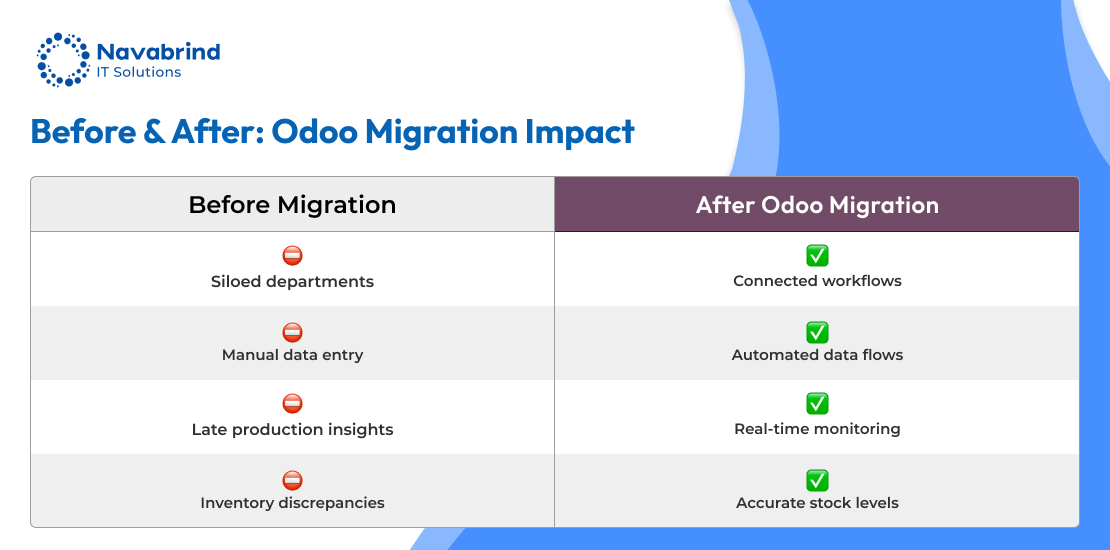
Rural hospitals in 2026 face shrinking margins, limited staff availability, and outdated systems that slow down care delivery and billing cycles. Disconnected tools create delays in patient records, pharmacy updates, and financial tracking, leading to revenue leakage and operational gaps. Growth becomes difficult when teams spend time fixing system issues instead of focusing on patients.
Rural healthcare software solutions address this gap by bringing operations into one connected environment. With rural hospital management software, hospitals gain better control over patient flow, inventory, billing, and reporting without high infrastructure costs. This shift supports faster workflows, reduces dependency on paperwork, and improves financial visibility.
An affordable hospital management system such as Odoo works as a small hospital ERP system designed for rural setups. Through cloud ERP for rural healthcare, hospitals access data from anywhere, reduce IT expenses, and maintain continuity. Integrated Healthcare cost reduction software strengthens margins and supports consistent, quality care delivery.
Why Are Rural Hospitals in the US Struggling Financially in 2026?
Rural providers face persistent revenue pressure driven by low patient volumes, an unfavorable payer mix, and tighter reimbursement policies. Payments arrive late, margins shrink, and cash flow becomes unpredictable. At the operational level, paper-driven processes, disconnected applications, and billing gaps inflate overhead and delay collections.
Legacy systems demand high capital and maintenance spend, placing upgrades out of reach for smaller facilities. As a result, inefficiencies compound, duplicate data entry, missed charges, and limited financial visibility reduce profitability and slow decision-making.
This environment makes Healthcare cost reduction software a strategic requirement. Rural hospital management software and rural healthcare software solutions replace fragmented tools with a connected platform that strengthens billing accuracy, tracks expenses, and shortens revenue cycles. An affordable hospital management system functioning as a small hospital ERP system, supported by cloud ERP for rural healthcare, reduces IT burden and supports consistent performance without large upfront investment.
Rural Hospital Management Software: What It Should Include
A reliable rural hospital management software must support daily hospital operations without adding complexity or cost pressure. Small-scale providers require a system that connects clinical care, administration, and finance in one environment. The goal is consistency in workflows, faster turnaround, and better control over expenses.
Effective rural healthcare software solutions include patient registration, EMR-style records, and clinical workflows that help doctors and staff manage consultations and treatment histories without gaps. Appointment scheduling and OPD coordination reduce crowding and improve patient flow.
An affordable hospital management system should handle billing, insurance tracking, and claims-ready documentation to prevent revenue loss. Integrated pharmacy, lab, and inventory tracking ensure availability of medicines and supplies without overstocking.
As a small hospital ERP system, the platform must present simple dashboards and reports that support decision-making without technical expertise. With cloud ERP for rural healthcare, facilities gain access to data across locations, helping teams stay aligned and focused on outcomes while using Healthcare cost reduction software to control operational spend.
Affordable & Cloud-Based ERP for Rural Healthcare
The search for an effective system leads to one conclusion: value comes from flexibility, not size. For rural providers, the answer to the best option lies in a solution that delivers control without heavy investment. An affordable hospital management system with cloud access meets this requirement.
Large, on-premise platforms demand high upfront spending, complex setup, and ongoing maintenance. In contrast, cloud ERP for rural healthcare offers a lighter approach with faster deployment, lower infrastructure costs, and access from any location. This model fits rural environments where resources and technical support remain limited.
Odoo stands out as a practical choice within rural healthcare software solutions. As a small hospital ERP system, it allows hospitals to activate only required modules like billing, patient records, pharmacy, or inventory by keeping costs aligned with usage. Cloud hosting removes dependency on internal IT teams and supports remote access across clinics.
Designed to function in low-bandwidth settings, this rural hospital management software maintains continuity even in connectivity constraints. Combined with Healthcare cost reduction software capabilities, it strengthens financial control and supports sustainable hospital operations.
How Can ERP Software Reduce Costs for Small Rural Hospitals?
A well-implemented rural hospital management software plays a central role in controlling expenses and protecting margins. As Healthcare cost reduction software, an ERP platform improves financial outcomes by tightening processes across billing, inventory, and administration.
Billing and claims workflows become streamlined, reducing coding errors and rejected claims. Accurate records and faster processing improve collections and prevent revenue loss. Within pharmacy and supply chains, better tracking minimizes overstocking and eliminates losses from expired medicines. This level of control strengthens procurement planning and avoids unnecessary spending.
Administrative workload drops as routine tasks shift into digital workflows, allowing staff to focus on patient care instead of paperwork. This shift improves productivity without increasing headcount.
Built-in dashboards within rural healthcare software solutions provide visibility into revenue leakage, underutilized services, and high-cost treatments. As a small hospital ERP system supported by cloud ERP for rural healthcare, the platform delivers actionable insights that help hospitals manage costs, improve efficiency, and sustain operations without financial strain.
How Does Odoo Help Small Hospitals Manage Operations Efficiently?
Odoo brings hospital functions into one connected platform, enabling smooth coordination across front-desk, pharmacy, lab, and billing. As a small hospital ERP system, it ensures that patient data flows across departments without duplication, reducing delays and improving service quality.
Standardized workflows guide patient journeys from registration to consultation, treatment, pharmacy, and follow-ups. This consistency reduces errors, improves care continuity, and strengthens operational control. Medicine tracking, lab updates, and billing entries remain aligned, preventing gaps that impact revenue and patient experience.
Role-based access ensures staff view only relevant information, maintaining data security and reducing confusion. Front-desk teams handle registrations, doctors access clinical records, and pharmacists manage inventory without overlap.
Ease of use remains a key advantage. The interface supports quick onboarding, minimizing training time. Mobile-ready access allows teams in remote locations to stay connected. As part of rural healthcare software solutions, this rural hospital management software, supported by cloud ERP for rural healthcare and Healthcare cost reduction software, enables consistent operations with controlled costs.
Can Cloud-Based ERP Improve Rural Hospital Sustainability?
Cloud deployment strengthens long-term sustainability for rural providers. Cloud ERP for rural healthcare reduces upfront capital spending on servers, licenses, and maintenance. Hospitals avoid recurring hardware upgrades and downtime linked to local infrastructure, keeping operations stable and predictable.
Automatic updates and security patches ensure systems stay compliant with evolving healthcare regulations. This reduces risk exposure and removes the burden of managing technical upgrades in-house. With consistent system performance, hospitals maintain continuity without disruption.
Digital capabilities expand without heavy setup. Telehealth services, remote patient monitoring, and patient portals become accessible through rural healthcare software solutions, helping providers extend care beyond physical locations. This supports better patient engagement and increases service reach.
Odoo, as a rural hospital management software and small hospital ERP system, fits this model by delivering scalable functionality through the cloud. Integrated Healthcare cost reduction software capabilities strengthen financial control and reduce operational waste. This approach supports resilience, allowing rural hospitals to sustain operations, adapt to demand shifts, and maintain quality care without financial strain.
Odoo vs. Alternatives: Affordable Hospital Management System Options
Healthcare providers evaluating systems face two common paths that are heavy legacy ERP platforms or lighter solutions designed for smaller facilities. Legacy systems demand high capital, long deployment cycles, and ongoing maintenance that strain limited budgets. In contrast, a small hospital ERP system such as Odoo offers flexibility without financial burden, making it a practical affordable hospital management system for rural providers.
Another comparison lies between generic EMR tools and ERP-driven platforms. EMRs focus on patient records, yet leave billing, inventory, and operations disconnected. A full rural hospital management software integrates clinical, administrative, and financial workflows into one environment. This approach improves coordination, reduces errors, and strengthens revenue tracking.
Within rural healthcare software solutions, Odoo delivers a balanced approach. As a cloud ERP for rural healthcare, it adapts to changing needs without heavy infrastructure. Integrated Healthcare cost reduction software capabilities support tighter expense control and better margins. This makes Odoo a strong fit for budget-conscious, mid-sized, rural, and faith-based hospitals aiming for stability, growth, and consistent patient care.
Implementation Approach: How to Roll Out ERP in a Rural Hospital
A phased rollout delivers faster value with minimal disruption. Start with high-impact areas that bring immediate control to the patient registration, pharmacy, and inventory. This foundation allows rural hospital management software to organize patient flow, track medicines, and reduce stock losses from day one. Within rural healthcare software solutions, this first phase builds confidence across staff and creates measurable gains.
Next, extend the system to billing, lab coordination, and reporting. At this stage, hospitals strengthen revenue capture, improve claims readiness, and gain visibility into financial performance. As a small hospital ERP system, the platform evolves alongside staff familiarity, ensuring smooth adoption without operational friction.
A cloud ERP for rural healthcare keeps infrastructure demands low and removes dependency on large IT teams. With Odoo as an affordable hospital management system, deployment remains lean and scalable. Integrated Healthcare cost reduction software capabilities begin delivering ROI early, helping hospitals control expenses and maintain steady operations through each phase of implementation.
Frequently Asked Questions
1.Why are rural hospitals in the US struggling financially in 2026?
Rural hospitals face declining patient volumes, reimbursement pressure, and rising operating expenses. Paper-driven workflows and disconnected systems increase billing errors and slow collections. Without reliable rural hospital management software, smaller facilities lose revenue through inefficiency. Healthcare cost reduction software helps hospitals improve financial control and protect long-term stability.
2.How can ERP software reduce costs for small rural hospitals?
A small hospital ERP system reduces waste by improving billing accuracy, inventory visibility, and staff productivity. Fewer claim denials, better stock control, and reduced administrative workload lower operating costs. Rural healthcare software solutions create stronger financial oversight and support sustainable hospital performance.
3.What is the best affordable ERP for rural healthcare providers?
For rural providers, Odoo stands out as an affordable hospital management system because hospitals can activate only required functions. As a cloud ERP for rural healthcare, it reduces infrastructure spending and supports gradual expansion without excessive financial pressure.
4.How does Odoo help small hospitals manage operations efficiently?
Odoo connects front desk, billing, pharmacy, lab, and reporting inside one platform. This rural hospital management software improves coordination, reduces duplicate work, and gives staff role-based access. Faster adoption and mobile access support teams working across multiple locations.
5.Can cloud-based ERP improve rural hospital sustainability?
Yes. Cloud ERP for rural healthcare reduces hardware expenses, lowers maintenance costs, and supports remote care services. Automatic updates strengthen security and compliance, helping hospitals remain stable with fewer technical resources.
6.What features should rural hospital management software include?
Effective rural hospital management software should include patient registration, clinical records, appointment handling, billing, pharmacy management, inventory control, and financial reporting. Strong rural healthcare software solutions help smaller hospitals improve care quality and maintain healthier margins.
Schedule a conversation with us now!
Related Articles








 Post
Post Post
Post