Inventory Challenges in the FMCG Industry
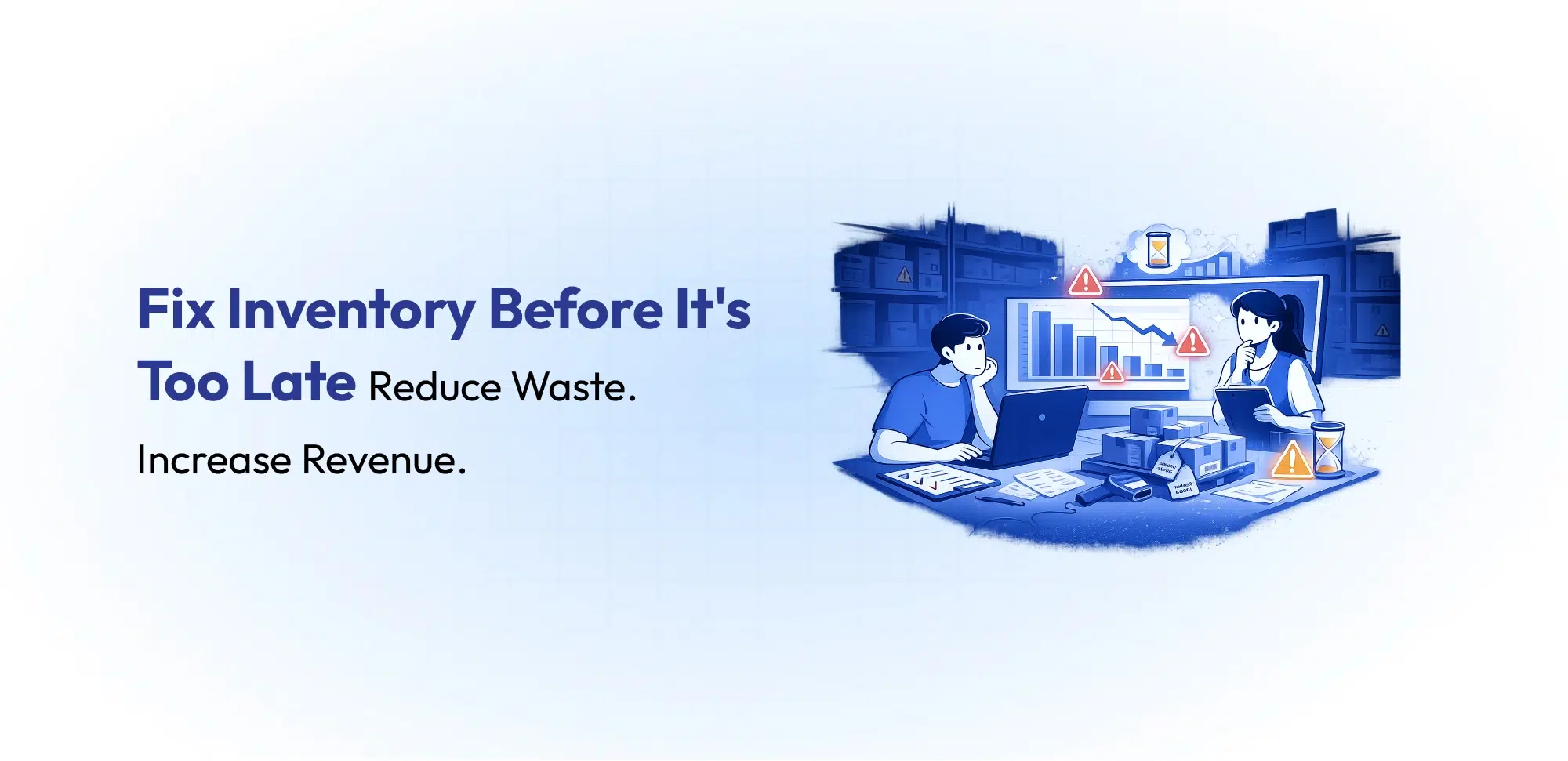
The FMCG distribution landscape in India faces rising complexity driven by fast-moving product cycles, expanding retail networks, and fluctuating demand patterns that challenge operational stability. Inventory control stands as a decisive factor in maintaining profitability across FMCG distribution management software ecosystems, where even minor mismatches between supply and demand can lead to stockouts, excess holding costs, and reduced turnover. As distribution networks expand, reliance on ERP for FMCG distribution becomes essential to maintain accuracy across procurement, warehousing, and dispatch cycles. Poor inventory governance reduces margin visibility and disrupts replenishment cycles, weakening distributor performance across high-volume channels. The need for FMCG distribution management software continues to rise as distributors seek stronger coordination across suppliers, warehouses, and retail partners. Inventory management software for distributors and distribution ERP software enable structured tracking of stock movement across multiple nodes, improving decision-making across operations. Odoo for FMCG supports streamlined coordination across the wholesale distribution management system, strengthening inventory accuracy and supply chain responsiveness in a rapidly evolving FMCG market environment.
Understanding Inventory Mismanagement in FMCG Distribution
Inventory mismanagement in FMCG distribution refers to breakdowns in stock tracking, replenishment planning, and warehouse coordination that disrupt supply continuity across fast-moving product lines. In FMCG distribution management software environments, misalignment between purchase cycles and sales movement leads to stock distortion, delayed dispatch cycles, and revenue leakage. FMCG distributors frequently face challenges such as uneven stock allocation, demand mismatch, and poor visibility across multiple storage points, which weaken operational stability within distribution ERP software ecosystems. Overstocking increases holding pressure and ties up working capital, while stockouts disrupt retail availability and reduce order fulfillment rates in high-volume FMCG distribution management software networks. Inventory management software for distributors reduces these gaps by improving stock tracking across warehouses and transit points. Manual workflows amplify errors in order entry, stock reconciliation, and dispatch coordination, creating inconsistencies across wholesale distribution management system processes. ERP for FMCG distribution and Odoo for FMCG strengthen accuracy across procurement, warehousing, and replenishment cycles, improving inventory balance and supporting scalable FMCG distribution operations
Financial Impact of Inventory Mismanagement
Financial disruption in FMCG distribution occurs when inventory planning fails to align stock movements with demand cycles, resulting in measurable revenue leakage in high-volume FMCG distribution management software environments. Expired and unsold stock reduces profit realization and creates write-off pressure, weakening financial stability in ERP for FMCG distribution systems. Rising warehousing and holding costs increase operational burden as excess inventory occupies storage capacity within distribution ERP software frameworks, reducing space efficiency and inflating logistics expenditure. Stock shortages disrupt order-fulfillment cycles, resulting in missed sales opportunities across FMCG distribution management software networks and weakening retailers’ confidence. Poor inventory planning also disrupts cash flow cycles, as capital remains tied up in slow-moving stock rather than being reinvested in procurement and expansion. Emergency procurement and discount-driven liquidation compress margins, creating pricing instability across wholesale distribution management system operations.
Operational Challenges Indian FMCG Distributors Face
Operational challenges in FMCG distribution stem from high SKU complexity, fragmented inventory visibility, and weak coordination among functional teams, creating friction within FMCG distribution management software environments. Managing thousands of fast-moving SKUs increases tracking pressure, as frequent stock rotation demands accurate recording across procurement, storage, and dispatch cycles within ERP for FMCG distribution systems. Distributors face difficulty monitoring inventory spread across multiple warehouses, leading to inconsistencies in stock allocation and delayed fulfillment in distribution ERP software frameworks. Demand forecasting in regional markets becomes inconsistent due to shifting consumption patterns, seasonal fluctuations, and retailer-level variability, reducing planning accuracy across FMCG distribution management software operations. Weak coordination between sales and procurement teams disrupts replenishment cycles, causing mismatches between demand intake and supply execution within wholesale distribution management system processes. Dependency on spreadsheets and legacy systems increases error rates, slows decision cycles, and limits visibility across Inventory management software for distributors workflows. Odoo for FMCG strengthens coordination, improves SKU tracking accuracy, and stabilizes operational flow across FMCG distribution ecosystems.
How Inventory Mismanagement Affects Customer Relationships
Inventory mismanagement disrupts customer relationships by undermining order reliability and eroding trust within FMCG distribution management software environments. Delayed deliveries and order fulfillment gaps emerge when stock movement lacks coordination across ERP for FMCG distribution systems, resulting in inconsistent dispatch timelines and retailer frustration. Product unavailability at retail points creates dissatisfaction, as buyers shift toward alternative suppliers when FMCG distribution management software workflows fail to maintain steady replenishment. Uneven stock presence across channels reflects weak alignment between warehouses, sales routes, and distribution planning within distribution ERP software ecosystems, reducing market consistency. Distributor credibility declines when repeated supply gaps affect retail operations, weakening brand confidence across wholesale distribution management system networks. Rising customer churn becomes common in competitive FMCG markets where reliability drives purchasing decisions and long-term contracts. Inventory management software for distributors reduces these risks by improving stock visibility, strengthening order accuracy, and stabilizing supply flow across Odoo for FMCG environments, supporting stronger retailer relationships and sustained distribution performance.
Why Traditional Inventory Systems Fail in 2026
Traditional inventory systems struggle to support FMCG distribution environments due to limited visibility, weak system connectivity, and delayed data updates across FMCG distribution management software ecosystems. Lack of live inventory visibility creates gaps between stock movement and demand signals, leading to mismatches in ERP for FMCG distribution workflows. Limited integration with sales and procurement functions reduces coordination efficiency, causing breakdowns in replenishment cycles within distribution ERP software environments. Manual inventory updates increase error probability, resulting in inaccurate stock records across FMCG distribution management software operations and weakening operational reliability. Inability to support omnichannel distribution weakens performance across retail, wholesale, and online channels, creating fragmented execution in wholesale distribution management system structures. Slow decision cycles stem from scattered data sources, limiting timely action in response to demand shifts and supply shortages. Inventory management software for distributors strengthens synchronization across warehouses, sales channels, and procurement teams, while Odoo for FMCG enhances coordination and data consistency, enabling improved operational stability across FMCG distribution networks.
How ERP Systems Solve FMCG Inventory Problems
ERP systems resolve FMCG inventory challenges by unifying stock control, demand planning, and distribution workflows within FMCG distribution management software environments. Real-time synchronization across warehouses ensures accurate stock positioning and movement tracking across ERP for FMCG distribution operations, reducing mismatches between demand and supply. Automated procurement and replenishment planning improve stock availability by aligning purchase cycles with sales patterns in distribution ERP software frameworks, reducing dependency on reactive ordering processes. Batch, lot, and expiry tracking strengthen compliance and reduce wastage, improving product lifecycle control across FMCG distribution management software networks. Demand forecasting supported by sales analytics improves planning accuracy across regional markets, enabling better alignment between supply and consumption trends in wholesale distribution management system ecosystems. Centralized operations unify procurement, warehousing, and distribution functions into a single workflow structure, improving coordination across Inventory management software for distributors. Odoo for FMCG enhances operational consistency and visibility, supporting stronger execution across FMCG distribution networks and improving inventory control outcomes.
Why Indian FMCG Distributors Are Moving to ERP Solutions
Indian FMCG distributors are shifting toward ERP solutions due to rising operational complexity, margin pressure, and expanding multi-channel distribution demands across FMCG distribution management software environments. Faster distribution execution has become necessary to handle high-volume order cycles, reduce delays, and maintain stock alignment across ERP for FMCG distribution systems. Growth in e-commerce and retail expansion has increased channel fragmentation, requiring stronger coordination across warehouses, retailers, and procurement units within distribution ERP software frameworks. Margin pressure and wastage reduction goals push distributors to adopt Inventory management software for distributors that improves stock rotation, reduces expiry losses, and strengthens replenishment control. Digital transformation across FMCG supply chains is driving adoption of FMCG distribution management software that connects procurement, inventory, and sales data into a single operational flow. Odoo for FMCG is gaining traction due to its ability to support wholesale distribution management system requirements, improve inventory visibility, and enhance coordination across distribution networks, enabling distributors to improve operational stability and financial performance.
Best Practices for Inventory Optimization in FMCG Distribution
Inventory optimization in FMCG distribution depends on disciplined coordination across stock tracking, procurement, and demand alignment within FMCG distribution management software environments. Automating inventory tracking and replenishment improves stock continuity by aligning purchase cycles with consumption patterns across ERP for FMCG distribution systems, reducing delays in replenishment workflows. Integration of ERP with sales and warehouse systems strengthens data flow across distribution ERP software structures, ensuring accurate visibility of stock movement across locations. Monitoring inventory KPIs and product movement supports better control over turnover rates, aging stock, and demand variability within FMCG distribution management software operations. Strong supplier coordination and procurement planning reduce supply gaps and improve order consistency across wholesale distribution management system networks. Building scalable distribution operations enables distributors to manage growth in SKU volume and channel expansion without disruption. Inventory management software for distributors improves accuracy across warehouses and sales channels, while Odoo for FMCG enhances operational alignment, supporting stable execution and improved inventory control across FMCG distribution environments.
Future of Inventory Management in FMCG Distribution
FMCG distribution is moving toward data-led inventory ecosystems where planning accuracy and execution speed define competitiveness across FMCG distribution management software environments. AI-driven demand forecasting and inventory planning strengthen stock alignment by analysing sales trends, consumption patterns, and seasonal shifts within ERP for FMCG distribution systems, reducing uncertainty in replenishment cycles. Smart warehousing and distribution automation improve handling, sorting, and dispatch efficiency across distribution ERP software structures, increasing stock accuracy and reducing operational delays. Cloud ERP adoption across FMCG businesses enables scalable access to inventory, procurement, and sales data across multiple locations within FMCG distribution management software networks, supporting consistent coordination. Data-driven decision-making improves margin control by identifying slow-moving stock, optimizing procurement cycles, and reducing wastage across wholesale distribution management system operations. Inventory management software for distributors enhances visibility across warehouses and channels, while Odoo for FMCG strengthens operational alignment and financial control. Eliminating inventory mismanagement in 2026 depends on unified systems that connect supply, demand, and distribution into a coordinated FMCG ecosystem.
Frequently Asked Questions
1.What is FMCG distribution management?
FMCG distribution management refers to the coordination of product movement from manufacturers to retailers across fast-moving consumer markets, covering procurement, warehousing, stock allocation, and delivery execution within FMCG distribution management software environments. It ensures continuous product availability, accurate inventory flow, and efficient channel servicing across retail and wholesale networks supported by ERP for FMCG distribution systems.
2.How does ERP help FMCG distributors manage inventory?
ERP systems improve inventory control by connecting procurement, warehouse operations, and sales data into one operational flow across distribution ERP software frameworks. This improves stock visibility, supports replenishment planning, and reduces discrepancies across FMCG distribution management software operations, enabling better control over demand and supply alignment.
3.Why do FMCG distributors need ERP software?
FMCG distributors require ERP software to manage high SKU volumes, multi-location stock movement, and complex retail demand patterns. Inventory management software for distributors and Odoo for FMCG strengthen coordination across wholesale distribution management system networks, improving accuracy, reducing wastage, and supporting margin control.
4.What causes inventory mismanagement in FMCG distribution?
Inventory mismanagement arises from manual tracking errors, weak demand planning, poor warehouse coordination, and disconnected systems across FMCG distribution management software environments. These gaps lead to stock imbalance, delayed replenishment, and inaccurate reporting within ERP for FMCG distribution workflows.
5.How to reduce stockouts in the FMCG distribution business?
Stockouts reduce when distributors implement accurate forecasting, real-time stock tracking, and synchronized replenishment planning across distribution ERP software systems. Inventory management software for distributors and Odoo for FMCG improve visibility across supply channels, ensuring consistent stock availability across retail networks.
Schedule a conversation with us now!
Related Articles







 Post
Post