Corporate Sustainability Reporting Directive (CSRD) is no longer on the horizon
European manufacturers entered a reporting era that demands traceable ESG data, auditable disclosures, and measurable environmental accountability. CSRD (Corporate Sustainability Reporting Directive) requirements now influence procurement, investor confidence, supply chain partnerships, and financing decisions across Europe. Industrial firms relying on disconnected spreadsheets face rising reporting gaps, delayed disclosures, and governance exposure.
For sectors using ERP for chemical industry operations and ERP for steel industry production environments, sustainability metrics now carry equal weight alongside operational performance. Energy consumption, emissions tracking, waste handling, supplier validation, and carbon accountability require connected business records across finance, operations, and compliance teams.
This shift places CSRD compliance software at the center of enterprise reporting. Companies adopting ESG reporting ERP Europe frameworks through Odoo ERP Europe gain a practical route toward traceable sustainability governance. When paired with sustainability reporting software 2026 capabilities, ERP data transforms into audit-ready ESG reporting that supports regulatory expectations, stakeholder transparency, and long-term operational credibility across European industrial markets.
What CSRD Actually Demands from Industrial Companies
Corporate Sustainability Reporting Directive (CSRD) introduces a reporting framework that requires industrial companies to document environmental, social, and governance performance with financial-grade accountability. Businesses must track double materiality, maintain verifiable audit trails, and capture granular operational data across emissions, procurement, production, logistics, waste, and supplier networks. This reporting standard extends far beyond sustainability summaries. Regulators expect traceable records supported by measurable evidence.
Spreadsheet-driven ESG processes create fragmented datasets, inconsistent calculations, version conflicts, and reporting delays. As reporting volumes expand across European operations, disconnected files create compliance exposure and weaken decision-making. Industrial enterprises managing complex production cycles through ERP for chemical industry and ERP for steel industry environments require connected reporting infrastructure instead of isolated documentation methods.
This is where CSRD compliance software and ESG reporting ERP Europe strategies become business-critical. Odoo ERP Europe connects operational records with sustainability reporting software 2026 platforms, allowing organizations to align ESG disclosures with financial reporting structures, governance expectations, and enterprise-wide accountability.
Why ERP Is the Right Foundation for ESG Reporting in Europe
ESG reporting begins inside operational systems, not external reporting platforms. Energy usage, production output, procurement records, transport activity, emissions tracking, inventory movement, and supplier performance originate across daily business processes. Without connected ERP infrastructure, sustainability reporting becomes fragmented, delayed, and difficult to validate during audits.
An integrated ESG reporting ERP Europe framework captures sustainability data at the source. Manufacturing transactions, utility consumption, waste records, maintenance logs, and vendor documentation flow into one connected environment. This reporting structure gives ERP for chemical industry and ERP for steel industry companies stronger visibility across environmental impact and governance obligations.
Businesses using disconnected bolt-on tools face duplicated records, reconciliation issues, and reporting inconsistencies. Odoo ERP Europe creates a centralized operational foundation that supports CSRD compliance software initiatives with traceable business data and audit-ready reporting workflows.
As 2025–2026 compliance deadlines approach, phased ERP adoption allows industrial enterprises to standardize reporting processes, strengthen governance controls, and align sustainability reporting software 2026 requirements with long-term operational reporting maturity.
Industry Analysis: Chemical Sector
Chemical manufacturers face intense reporting pressure under CSRD due to hazardous material handling, emissions accountability, supplier transparency, and environmental risk exposure. Regulatory frameworks such as REACH demand traceable documentation across sourcing, production, storage, transport, and disposal activities. Scope 3 emissions reporting adds another layer of complexity, requiring visibility across suppliers, logistics providers, and downstream operations.
An ERP for the chemical industry environment strengthens ESG governance by connecting production records, waste streams, energy consumption, batch traceability, safety documentation, and supplier ESG data inside one operational ecosystem. This connected reporting structure supports CSRD compliance software initiatives with measurable emissions tracking and audit-ready sustainability records.
Industrial firms evaluating ESG reporting ERP Europe platforms should prioritize process traceability, environmental reporting workflows, compliance documentation, supplier risk visibility, and carbon accounting support. Odoo ERP Europe provides manufacturers with connected operational reporting that aligns sustainability reporting software 2026 expectations with regulatory accountability, governance requirements, and enterprise-wide environmental performance management.
Industry Analysis: Steel Sector
Steel manufacturers operate under intense environmental scrutiny due to carbon-intensive production processes and expanding European emissions regulations. CSRD reporting now intersects with the EU Emissions Trading System (ETS), placing pressure on producers to document emissions output, energy usage, raw material sourcing, and decarbonization progress with audit-grade accuracy.
An ERP for the steel industry environment connects production planning, furnace operations, procurement, inventory movement, transport records, and emissions tracking into one reporting structure. This operational visibility strengthens traceability from raw material intake through finished product delivery, creating measurable accountability across the manufacturing lifecycle.
For ESG reporting ERP Europe initiatives, connected ERP infrastructure transforms shop-floor activity into board-level sustainability disclosures. Energy consumption trends, carbon intensity metrics, production efficiency indicators, and environmental performance data flow into CSRD compliance software frameworks without fragmented reporting gaps.
Odoo ERP Europe supports sustainability reporting software 2026 objectives by linking operational manufacturing data with governance reporting, allowing steel enterprises to strengthen compliance readiness and long-term decarbonization planning.
Odoo ERP as a Practical Option for European Mid-Market Companies
European SMEs and mid-market manufacturers are adopting Odoo ERP Europe to strengthen operational visibility, compliance management, and ESG reporting readiness without relying on fragmented software ecosystems. Industrial companies facing CSRD pressure require connected business data across finance, procurement, manufacturing, inventory, quality control, and supplier management. Odoo delivers this operational continuity through one connected ERP environment.
Manufacturing workflows, inventory traceability, accounting records, quality inspections, procurement documentation, and supplier transactions contribute valuable ESG reporting inputs for CSRD compliance software initiatives. This operational structure supports ERP for chemical industry and ERP for steel industry organizations seeking measurable environmental reporting and governance accountability.
Odoo ERP Europe integrates with sustainability reporting software 2026 platforms through APIs, reporting connectors, and data synchronization frameworks that support emissions tracking, carbon disclosures, and audit preparation.
European localization capabilities strengthen adoption across multilingual operations, regional tax structures, compliance frameworks, and cross-border reporting requirements, allowing industrial enterprises to align ESG reporting ERP Europe objectives with operational governance and regulatory transparency.
Choosing the Right Sustainability Reporting Software in 2026
Sustainability reporting software 2026 platforms help European industrial companies manage ESRS mapping, XBRL tagging, disclosure frameworks, emissions calculations, and assurance-ready reporting outputs required under CSRD regulations. These platforms strengthen governance reporting by converting operational data into regulator-ready sustainability disclosures aligned with European reporting standards.
The success of any CSRD compliance software initiative depends on ERP connectivity. Sustainability platforms cannot produce reliable ESG reporting without operational data flowing from procurement, manufacturing, finance, inventory, logistics, supplier management, and energy consumption records. ESG reporting ERP Europe strategies require connected data architecture rather than isolated reporting applications.
Industrial enterprises evaluating reporting platforms should prioritize audit trail visibility, double materiality assessment capabilities, GRI and ESRS alignment, supplier ESG traceability, assurance preparation support, and enterprise reporting scalability. For ERP for chemical industry and ERP for steel industry organizations, Odoo ERP Europe creates a connected operational foundation that strengthens data accuracy, reporting accountability, and sustainability governance across European compliance frameworks.
Building a Roadmap: From ERP Data to CSRD-Ready Report
Step 1: Audit your current ERP data quality for ESG-relevant fields
Start by identifying which operational records already exist inside your ERP environment. Review energy consumption logs, procurement transactions, supplier records, inventory movement, waste handling data, production outputs, transport activity, and accounting documentation. Industrial companies using ERP for chemical industry and ERP for steel industry operations should evaluate data consistency, traceability, ownership, and reporting frequency. This assessment reveals reporting blind spots that weaken CSRD compliance software readiness.
Step 2: Map data gaps to ESRS disclosure requirements
Compare existing ERP records against ESRS disclosure obligations. Identify missing emissions data, incomplete supplier ESG documentation, absent governance records, and unsupported environmental metrics. ESG reporting ERP Europe frameworks depend on measurable operational evidence linked to regulatory reporting categories. Gap analysis creates a reporting foundation aligned with sustainability reporting software 2026 expectations.
Step 3: Configure or extend ERP modules for sustainability data capture
Expand ERP workflows to capture sustainability-related operational activity across procurement, manufacturing, logistics, maintenance, waste management, and finance. Odoo ERP Europe allows industrial enterprises to configure reporting structures that strengthen emissions tracking, environmental accountability, supplier governance, and compliance documentation without disconnected reporting processes.
Step 4: Connect to sustainability reporting software for narrative + structured output
Integrate ERP data with sustainability reporting software 2026 platforms capable of ESRS mapping, XBRL tagging, carbon reporting, and disclosure preparation. This integration transforms operational records into regulator-ready ESG reporting outputs supported by traceable business evidence. Connected reporting structures reduce reconciliation gaps and improve reporting governance across European operations.
Step 5: Internal review, assurance, and submission
Before submission, conduct internal governance reviews covering data accuracy, audit trails, disclosure consistency, and executive accountability. External assurance requirements under CSRD demand verifiable ESG documentation supported by connected ERP records. Companies using Odoo ERP Europe gain stronger reporting transparency, helping finance, compliance, sustainability, and leadership teams prepare submission-ready disclosures with greater confidence.
- CSRD compliance has moved beyond sustainability departments and entered day-to-day industrial operations. Emissions tracking, supplier accountability, energy monitoring, governance reporting, and environmental disclosures now depend on connected operational data across finance, manufacturing, procurement, logistics, and inventory systems. Companies treating CSRD as a reporting exercise alone risk fragmented disclosures, audit exposure, and rising compliance costs.
- Industrial enterprises adopting ESG reporting ERP Europe frameworks through Odoo ERP Europe position themselves for stronger reporting governance and operational accountability. Connected ERP infrastructure supports ERP for chemical industry and ERP for steel industry environments by linking sustainability metrics with measurable business activity. This reporting maturity strengthens transparency across investors, regulators, suppliers, and enterprise leadership teams.
- As sustainability reporting software 2026 requirements continue expanding across Europe, businesses with connected CSRD compliance software ecosystems will move faster through audits, disclosures, and regulatory reviews. Assess your ERP readiness now, identify ESG data gaps early, and create a reporting foundation capable of supporting long-term European compliance expectations.
Frequently Asked Questions
1.What is CSRD and which EU companies must comply in 2026?
The Corporate Sustainability Reporting Directive (CSRD) is a European regulation that requires companies to disclose environmental, social, and governance performance using standardized reporting frameworks. In 2026, large EU companies, listed businesses, manufacturers, and selected non-EU enterprises operating within Europe must submit sustainability disclosures aligned with ESRS standards. Companies using CSRD compliance software and ESG reporting ERP Europe frameworks gain stronger reporting governance and audit readiness.
2.How can Odoo ERP help chemical companies meet CSRD requirements?
Odoo ERP Europe supports ERP for chemical industry operations through traceable procurement records, emissions monitoring, supplier documentation, waste tracking, inventory visibility, and compliance reporting workflows. This operational connectivity strengthens ESG reporting accuracy and supports sustainability reporting software 2026 integration requirements.
3.Does Odoo support ESG and sustainability reporting for EU businesses?
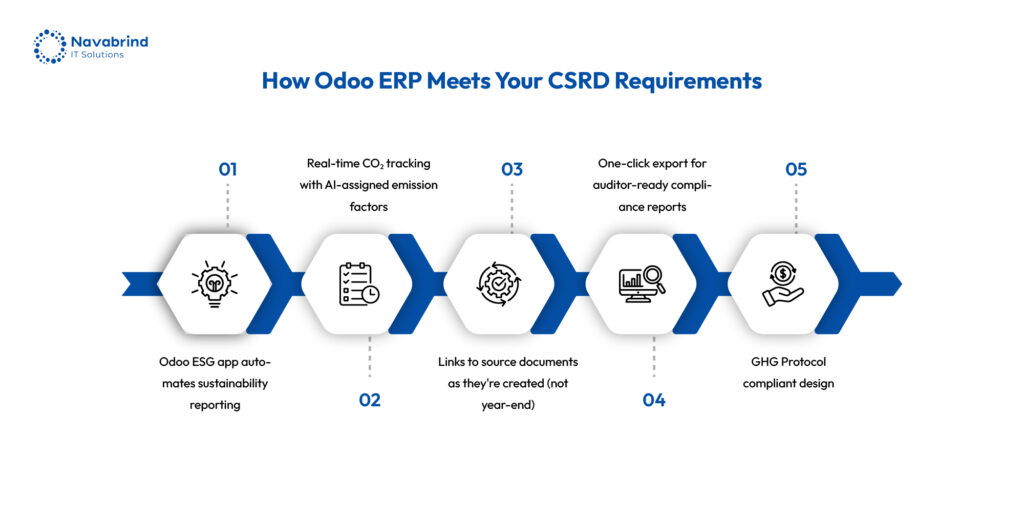
Yes. Odoo ERP Europe connects operational business data with ESG reporting processes through finance, manufacturing, procurement, inventory, and supplier management modules. Companies can integrate Odoo with CSRD compliance software platforms for ESRS disclosures, carbon reporting, and governance documentation.
4.What happens if a steel company fails CSRD compliance in Europe?
Non-compliance can expose steel manufacturers to regulatory scrutiny, investor pressure, reputational damage, financing challenges, and audit complications. ERP for steel industry environments help companies strengthen emissions reporting, governance accountability, and environmental disclosure management before compliance deadlines arrive.
5.Is Odoo ERP compliant with European sustainability reporting standards?
Odoo ERP Europe provides operational reporting infrastructure that supports ESG data management, audit traceability, and sustainability documentation aligned with European reporting expectations. Combined with sustainability reporting software 2026 platforms, Odoo strengthens CSRD reporting preparation and governance transparency.
6.How does ERP software help healthcare equipment firms track ESG data in Europe?
ERP systems help healthcare equipment manufacturers monitor supplier compliance, production emissions, inventory movement, transport activity, waste handling, and energy usage across European operations. ESG reporting ERP Europe frameworks convert this operational data into measurable sustainability disclosures supported by connected reporting records.
Schedule a conversation with us now!
Related Articles








 Post
Post