Procurement teams are not struggling due to lack of effort, they are trapped inside a broken P2P process. Duplicate invoices pile up. Approval chains stall progress. Supplier disputes drain time and cash flow. These issues don’t arise from people rather they stem from a fragmented procure to pay process that was never designed to scale with business growth.
The reality is blunt: when the P2P cycle lacks structure, inefficiencies multiply across the procurement to payment journey. Data silos distort visibility, approvals stretch timelines, and financial leakage becomes inevitable. What looks like operational noise is, in fact, a flawed P2P business process that silently erodes margins.
This is where the DMAIC framework – Define, Measure, Analyse, Improve, Control – of Six Sigma changes the conversation. Yet methodology alone cannot fix execution. Procurement leaders need a system that enforces process discipline.
Why the P2P Process Is Overdue for a Six Sigma Rethink
The P2P process sits at the center of operational spending, yet few organizations treat it as a controlled system. The procure to pay process spans a complete chain of activities:
- Purchase requisition
- Supplier selection
- Purchase order creation
- Goods receipt
- Invoice verification
- Payment execution
Each stage in this P2P cycle carries risk. A requisition raised without validation triggers unnecessary spend. Supplier selection without benchmarking leads to cost leakage. Purchase orders created with incorrect terms create downstream disputes. Goods receipt without verification disrupts inventory accuracy. Invoice mismatches delay approvals. Payment delays damage supplier relationships and weaken negotiation leverage.
Viewed through a Six Sigma lens, these are not minor gaps as they are defects. In manufacturing, a defect means a flawed product. In the procure to pay business process, a defect is any deviation from the intended flow:
- An invoice that doesn’t match the purchase order
- A purchase raised outside approval workflows
- A payment released beyond agreed timelines
- A supplier record with inconsistent data
Each defect introduces friction into the procurement to payment journey, increasing cost, cycle time, and operational risk.
The financial impact is substantial. Studies across procurement functions indicate:
- Invoice error rates can range between 1%–3%, creating rework and delayed closures
- Maverick spend can account for up to 20% of total procurement value
- Late payments trigger penalties, lost discounts, and strained supplier terms
For organizations operating with chemical manufacturing ERP, the stakes are even higher. Regulatory compliance, batch traceability, and supplier documentation demand zero tolerance for errors within the P2P business process.
The critical insight is straightforward: the P2P process isn’t failing rather unmanaged. Teams operate without visibility into defect rates, cycle time variance, or process deviations. Without measurement, there is no control. Six Sigma introduces discipline into the P2P cycle. It forces procurement teams to quantify inefficiencies, isolate root causes, and standardize execution across the procure to pay business process. Instead of reacting to issues, teams gain the ability to prevent them turning procurement into a controlled, measurable function that protects margins and strengthens supplier performance.
Learn more about Odoo Productivity features for UK businesses
Mapping the P2P Cycle Through a Six Sigma Lens — The DMAIC Framework
The P2P process gains structure and accountability when viewed through DMAIC. This framework converts the procure to pay process from a sequence of disconnected activities into a disciplined, trackable system within the P2P business process.
Define: Establish the Foundation of the Procure to Pay Business Process
Start by outlining the full scope of the procure to pay business process. Clarify what falls within the P2P cycle, who owns each stage, and how success is evaluated.
- Procurement teams manage sourcing and purchase orders
- Finance teams handle invoice validation and payment execution
- Operations confirm goods receipt and usage alignment
A defect-free P2P process means:
- Purchase requests follow approved pathways
- Suppliers meet predefined qualification standards
- Purchase orders reflect negotiated terms without deviation
- Goods receipt aligns with order quantities and quality
- Invoices match purchase orders and receipts
- Payments align with agreed timelines
This stage sets the benchmark for how the procurement to payment flow should operate under controlled conditions.
Measure: Quantify Performance Across the P2P Cycle
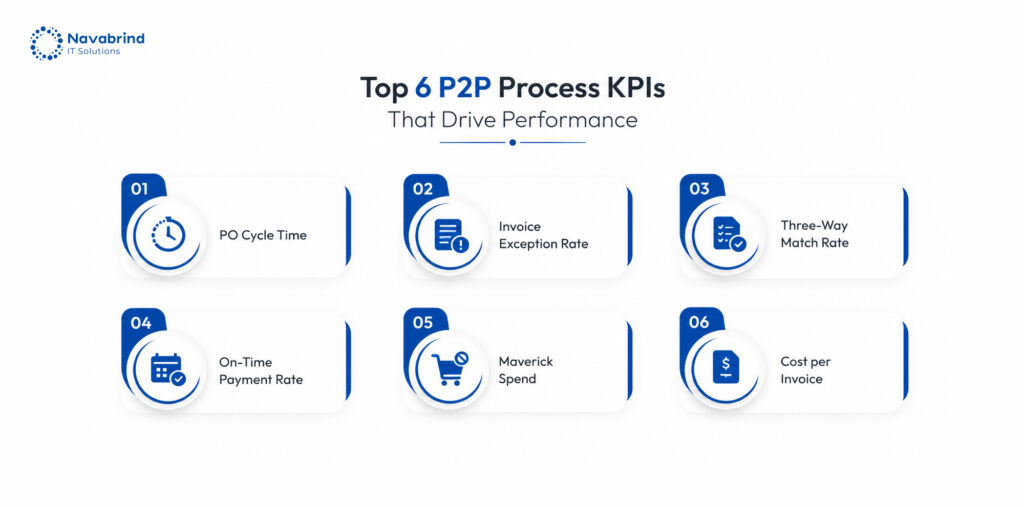
Without measurement, the P2P business process cannot be improved. Establish baseline metrics that reveal how the procure to pay process performs under current conditions:
- Purchase order cycle time
- Invoice exception rate
- On-time payment rate
- Three-way match success rate
- Maverick spend percentage
These metrics expose delays, inconsistencies, and cost leakage within the P2P cycle. For organizations running chemical manufacturing ERP, tracking these indicators supports compliance and audit readiness across procurement and finance.
Analyse: Identify the Root Causes Behind P2P Process Gaps
Data from the measurement stage reveals patterns. The next step is isolating why defects occur within the P2P process.
Common root causes include:
- Data entry inconsistencies that distort purchase orders and invoices
- Incomplete supplier master data leading to mismatches
- Approval gaps that allow unverified purchases
- Disconnected systems between procurement and finance
Each issue disrupts the procurement to payment flow, increasing rework and cycle delays. Root cause analysis shifts the focus from symptom correction to systemic resolution within the P2P business process.
Improve: Redesign the Procure to Pay Process for Consistency
With root causes identified, procurement teams can redesign the P2P cycle to eliminate recurring defects.
Key interventions include:
- Rule-based automation for purchase approvals and invoice validation
- Standardized supplier onboarding frameworks
- Contract compliance triggers to enforce negotiated terms
- Workflow redesign to remove redundant steps
These changes bring structure and predictability into the procure to pay business process, reducing cycle time and improving financial control.
Control: Sustain Gains Across the P2P Business Process
Improvements lose value without control mechanisms. The final phase ensures that the P2P process maintains consistency over time.
- Dashboards track performance across key P2P metrics
- Exception alerts flag deviations in the P2P cycle
- Periodic audits validate adherence to defined workflows
- Governance cadences reinforce accountability across teams
This stage locks in gains and prevents regression within the procurement to payment flow.
Key Takeaway:
DMAIC reshapes the P2P process into a governed system. The procure to pay process evolves from a reactive chain of tasks into a measurable, controlled, and continuously improving P2P business process—one that strengthens financial discipline, supplier performance, and operational consistency.
Schedule a conversation with us now!
Related Articles








 Post
Post Post
Post